The urban environment’s impact on health
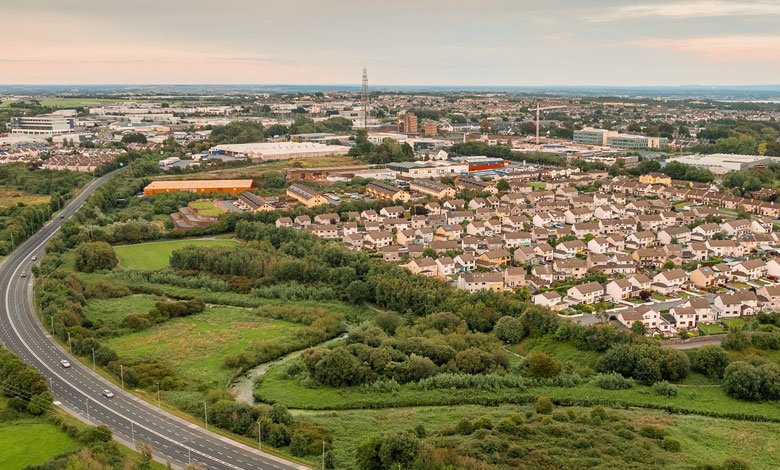
For every 1 per cent increase in green space, preventable deaths decrease by between 37 and 41 per cent, according to research led by Ruth Hunter, professor of public health and planetary health at Queen’s University Belfast.
Emphasising how this finding “really highlights the importance of these spaces, particularly in our most deprived communities”, Hunter outlines how life expectancy is set to increase in the UK over the coming decades. In 2010, there were approximately 10 million people aged 65 and over. This is expected to grow to 15.5 million by 2030, and 19 million by 2050.
“It is not just important that we are adding years to those lives, but we also must add life to those years,” says Hunter.
She indicates that cognitive health, encompassing dementia risk and reducing cognitive impairment, is crucial for healthy ageing. Hunter outlines that the number of people living with dementia globally is set to triple by 2050.
The 2024 Commission on Dementia Prevention by The Lancet shows that 40 per cent of dementia cases could be prevented or delayed by targeting 14 risk factors throughout the life course. These are less education, hearing loss, hypertension, smoking, obesity, depression, high cholesterol, uncorrected vision loss, physical inactivity, diabetes, excessive alcohol consumption, traumatic brain injury, air pollution, and social isolation.
Green spaces
Hunter further demonstrates the positive impacts of green spaces on cognitive health by citing June 2019 research she led on the Connswater Community Greenway in east Belfast. It shows that those living closest to the greenway experience improved quality of life, mental wellbeing, and social environment than those living further away.
Over a 40-year period, Hunter indicates that the number of new chronic diseases and preventable deaths would reduce significantly if those living near the greenway became physically active. The professor outlines that this can lead to economic benefits for the rest of society, citing a January 2023 study she led:
“What we see here is that for every £1 invested in the greenway, there is an expected £1.34 and £1.59 return which gives us a social present value of between £56.8 million and £67 million.
“If just 2 per cent of that local population become more active, then the greenway essentially pays for itself in terms of the reduced costs to the NHS in terms of deaths and new cases of chronic diseases.”
Air pollution
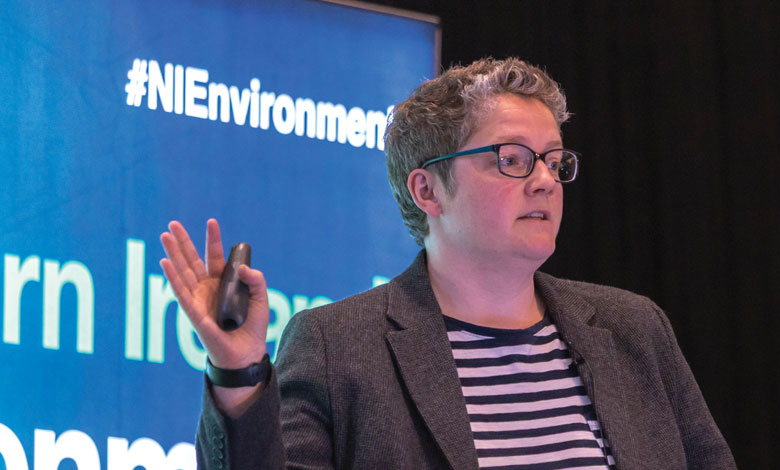
Hunter is Principal Investigator of the SPACE project which studies the living environment’s impact on dementia and brain health. The project explored environmental factors influencing healthy ageing and cognitive health and methods to promote both.
SPACE assessed the impact of air pollution, proximity to natural environments, noise and light pollution, soil pollution, access to public transport, access to road networks, climate change, proximity to climate resilient infrastructure, and epigenetics.
On air pollution, Hunter outlines the spatial distribution of particulate matter sources of PM2.5 in Northern Ireland. PM2.5 is the smallest known particle of air pollution that can cross the blood-brain barrier and is association with a rise in dementia risk and other cognitive impairments. Sources of PM2.5 included agriculture, traffic, energy, industry, wildfires, and windblown dust.
Hunter asserts that coal and traffic are PM2.5 sources particularly associated with cognitive decline. The study found that those living close to major road networks have an accelerated biological ageing by four to five years compared to those who live furthest away.
“This is due to the impact of traffic emissions from exhausts, tyre wear, and brake fluid. We see increased traces of zinc, molybdenum, led, and mercury in the soil closest to those road networks than we do soil furthest away. These different elements have impacts for cognitive, cardiovascular, heart, and respiratory health,” says Hunter.
“We do not need to just change how we travel for health reasons. We also need to change how we travel to meet our carbon budgets,” she adds.
Carbon budgets set the maximum amount of greenhouse gas emissions permitted over a five-year period. Hunter outlines how car use and dependency in Belfast could be reduced using recommendations from a January 2023 study by a study funded by the Medical Research Council:
- introduce a “universally safe, accessible, reliable, affordable, and properly resourced” public transport network;
- fast-track planning decision to support “long-term, sustainable, affordable, accessible city centre housing”;
- decrease car dependency for school runs;
- build a network of cycle access and dedicated cycle lanes connecting with the Greater Belfast Area and integrated with other transport policies and solutions;
- educate the public about the importance of reducing car usage; and
- incentivise reducing car dependency and usage.
Concluding, Hunter states that “the role of the environment in health prevention is really lacking” on the policy agenda. “But if we can address poor transport infrastructure, absence of green spaces and poor housing, it will have an impact on healthy ageing, general health, and environment and climate crises,” she adds.