Patient safety is what shapes medical regulation
Patient safety is not a standalone goal, but the thread that connects every aspect of modern medical regulation, writes Maria O’Kane, CEO, Medical Council.
Trust is the cornerstone of the doctor-patient relationship, and as the regulator, we hold the privileged role of maintaining that public trust in the medical profession.
Since stepping into the role of CEO of the Medical Council this summer, I have championed a clear vision to uphold that trust – with patient safety the guiding principle for everything we do, and robust governance and accountability strongly embedded into our work.
This year we launched the Medical Council’s 2025-2028 Statement of Strategy, built around four strategic themes: Transform, Balance, Empower and Support, and Invest. Patient safety is the common thread that ties in every aspect of good medical regulation. In tandem, we recognise that as an organisation we must continue to evolve, adapt, and embrace new technologies.
Proactive patient safety initiatives
Our role is not simply reactive, and we are increasingly emphasising prevention, proactivity and early identification of risks in practice. A key area of concern is antimicrobial resistance (AMR), one of the top 10 global public health threats by the World Health Organisation. Although the Medical Council does not issue clinical guidance, we do have information in our SafeStart guide for doctors who may be newly working in Ireland or less familiar with prescribing practices here. We are committed to working with our stakeholders to drive awareness of AMR amongst those who may be unaware of the risks, or resistant to change.
With artificial intelligence (AI), we have an obligation to show regulatory leadership in order to prevent gaps in governance and mitigate risks associated with AI-driven healthcare. Earlier this year, the Medical Council published our position statement on AI, which serves as a foundation for its responsible use in clinical practice. AI is just another tool in a doctor’s medicine bag, and it requires a doctor’s clinical judgement and experience when using it. Professional competence is a key professional responsibility of doctors using AI.
| The Medical Council is the regulator of doctors in Ireland and maintains the Register of Medical Practitioners – the register of all doctors who can practise medicine in Ireland. The Medical Council also sets the standards for medical education and training in Ireland. It oversees lifelong learning and skills development throughout doctors’ professional careers through its professional competence requirements. It is charged with promoting good medical practice. The Medical Council is also where the public may make a complaint against a doctor. |
The regulatory challenge with AI is finding the balance between supporting doctors and protecting the public, without stifling innovation. In my view, as the regulator, we must explore practical AI pilots while engaging with doctors and stakeholders to reduce fear around AI. It is certainly one of my key priorities as CEO, both for the organisation and the profession.
Strategic stakeholder engagement
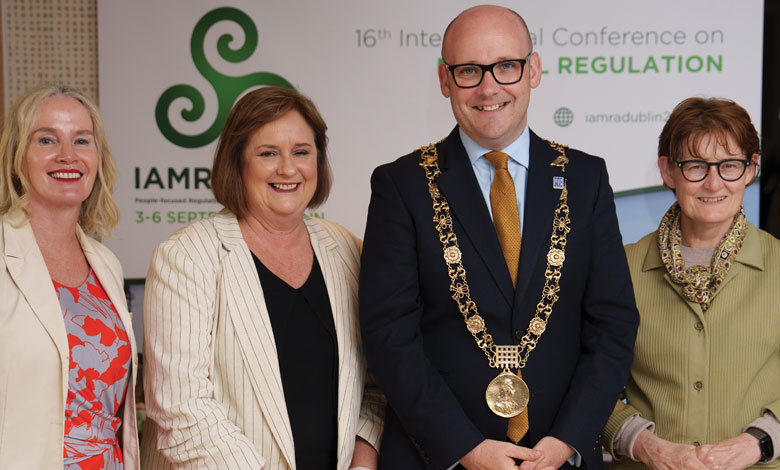
In line with our Strategy, proactive stakeholder engagement will ensure greater collaboration, understanding, and stronger partnerships, all of which contribute to better outcomes for patients. In September 2025, we hosted the International Association of Medical Regulatory Authorities (IAMRA) 16th International Conference on Medical Regulation in Dublin. More than 460 participants from 37 countries attended IAMRA’s first European conference in over a decade. Under the theme, ‘people-focused regulation for a safer global community,’ we united around our shared commitment of placing patients and communities at the centre of health practitioner regulation.
The conference provided an opportunity to benchmark Irish regulatory practice against international standards and identify areas where the Council can enhance its strategic and operational effectiveness. For me, the overarching need for strong collaboration was clear, as was focusing on shared outcomes rather than shared processes to achieve people-focused regulation.
Corporate governance and accountability
Regulation must be visible, proportionate and accountable. At times, the Medical Council has to make difficult decisions or speak out on issues that are uncomfortable, but necessary. I am acutely aware that these decisions affect not only the medical profession, but the public’s trust in doctors and in us as a regulator. That is why it is important that the public understands why we make these decisions. Fairness, clarity, and transparency must underpin everything we do.
I believe that accountability starts from within. This year, I have focused on clarifying our internal structures, enhancing oversight, and embedding risk management and learning into the organisation. My vision is that all our regulatory processes reflect the same consistency and high standards that we ask of others.
Looking ahead
The purpose of regulation is not simply to implement rules. Part of the right touch regulation model identifies priorities to work towards, and once priorities are identified, the regulatory framework is designed to solve it. Equally, in a complex, pressurised health system, regulation must stand strong to earn public trust.
The Medical Council’s task is to ensure that trust is not assumed, but earned each day through integrity, transparency, and a commitment to patient safety.
You can find out more about the Medical Council’s work by visiting:
|
Maria O’Kane
|