40 years of impact: How the HRB transformed health research
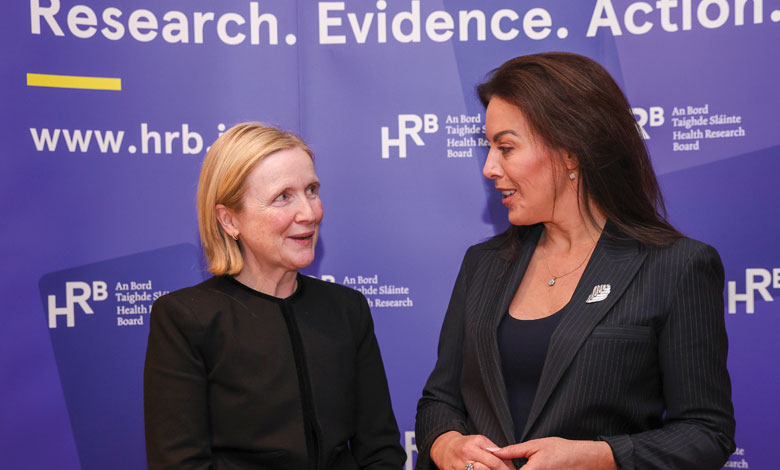
As the Health Research Board (HRB) marks its 40th anniversary in 2026, its new CEO Gráinne Gorman reflects on four decades of progress powered by research, collaboration, and innovation.
When the HRB was established in 1986, it was born out of clear necessity. At the time, Ireland lagged behind many peers in both economic performance and public policy, including in health and social support.
Unemployment and emigration were high, economic growth was low; and compared to countries like the UK, Denmark, or the Netherlands, our public services were under-resourced and fragmented.
Bodies like the HRB laid the groundwork for future reforms. Evidence-based approaches to policy became a foundational part of what later drove the Celtic Tiger. Economic and public policy advanced hand in hand.
From modest beginnings
Our first corporate plan in 1986 focused on R&D for health, postgraduate training, and linking academia with industry. The budget was modest, just IR£2.3 million. Fast forward to today and our annual investments are worth about €65 million, supporting hundreds of projects.
The HRB was established to address knowledge gaps hindering effective health and social care planning by providing robust evidence and research to inform decision-making for government, health services, and NGOs.
The research we funded or conducted provided the evidence and data needed to ensure science, innovation and public demand translated into better health outcomes and smarter policy.
Collaboration and consultation
From our earliest days, we understood that meaningful progress in health research and policy could only be achieved through collaboration. Over the past four decades, this principle has shaped our approach and delivered transformative results.
In 1998, we formalised our partnership with the Department of Health, ensuring that research priorities were aligned with national strategies. This collaboration created a direct link between evidence generation and policymaking, embedding research at the heart of planning.
We also supported initiatives arising from the Good Friday Agreement, tapping into broader all-island research initiatives and collaborating on specific programmes in areas such as cancer, palliative care and clinical trials.
By 2007, we took a major strategic step in strengthening Ireland’s clinical research infrastructure through partnerships with universities and hospitals, providing the foundation for world-class clinical trials.
In the same year we began strengthening Ireland’s global research footprint and later, as National Contact Point for health research funding under Horizon 2020, the EU’s flagship research and innovation programme. This enables Irish researchers to access multi-billion-euro funding streams and collaborate with leading experts driving innovation across Europe.
In 2014, we introduced a joint-funding scheme with Health Research Charities Ireland, a unique initiative that has invested over €28 million in patient-focused research into conditions such as rare diseases, cancer and epilepsy.
By 2017 we led on Public and Patient Involvement (PPI) initiatives, most notably the PPI Ignite programme, in collaboration with the Irish Research Council. This ongoing programme supports researchers involving the public and patients from the start of their projects.
These partnerships contributed to today’s research ecosystem by working hand-in-hand with government, academia, charities, and international organisations.
Data as an agent of change
The HRB Evidence Centre established in 2011 has become a driver of evidence-based policymaking providing reports and analysis of subjects as diverse as women’s health and water fluoridation.
Continually expanding our five national health information systems supports research, enables long-term service planning and informs policy, while giving a clear picture of the day-to-day demands on our health services.
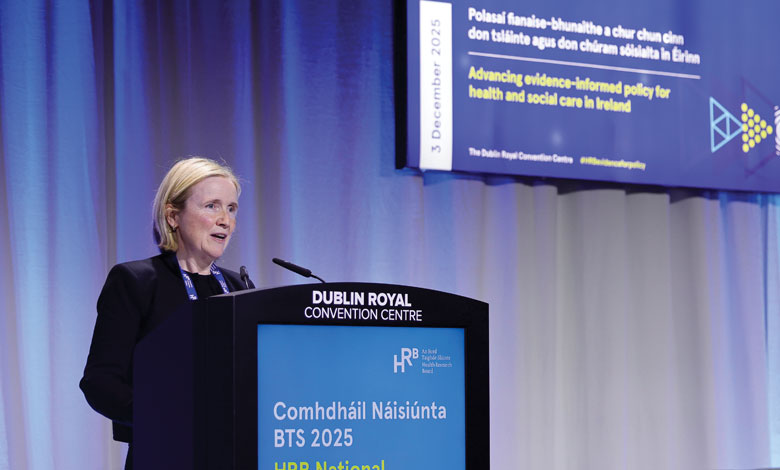
That data is a driver of positive outcomes is beyond question but putting it to good use is complex. The HRB has been instrumental protecting the public interest by overseeing the development and monitoring of health research ethics and consent considerations by supporting national committees established by the Department of Health.
And we continue this type of work in the present day working with the Health Information and Quality Authority and the Department of Health in preparing the ground for the EU’s forthcoming European Health Data Space which will enable patient data sharing across the EU, while ensuring data privacy and consent is overseen at national level.
Follow the evidence
Seamus Heaney wrote in The Cure at Troy that “hope and history rhyme”, and that has proved to be the case. Since our foundation 40 years ago, key public health indicators have been going in the right direction.
Our life expectancy is now the fifth highest in the EU at 82 years, up from 72 in the 1980s. Over the same period, infant mortality halved, and mortality rates for cancer, cardiovascular and respiratory disease have fallen by double digits.
These are real-life impacts, achieved through research and data – often funded or produced by the HRB – and we will continue to inform Ireland’s approach to ageing, chronic and rare disease, addiction, mental health and much more.
Paying dividends
While we can put figures on, and recall milestones that contributed to improvements in public health and social care over the past 40 years, the human value of the life-enhancing and life-saving research the HRB funds and conducts is inestimable.
But health research is not confined to societal well being. It is also about economic resilience. According to the European Commission, every euro invested in health research yields multiple returns in reduced costs for treatments and enhanced productivity.
When the HRB was founded, WA Watts, our first chairman, said: “In the long term, our health system will be a reflection of the research base underpinning it.” Forty years later, that statement rings true.
In recent years, the OECD noted Ireland has strengthened international collaboration, data infrastructure and support for evidence-based policy; and achieved “substantial improvements in population health over recent decades”. The connection between the two is self-evident.
Every improvement in public health, every policy informed by evidence, every life saved: these are the dividends of research.
As CEO, I am proud to now lead a state agency that has achieved so much working alongside many partners. But the journey is far from over. The next 40 years will bring new challenges such as the aging population and new opportunities such as AI.
Maintaining the same spirit of collaboration and innovation; further integrating national and international data, and strengthening the infrastructure for evidence-informed decision-making, the HRB can continue to improve health outcomes for individuals and society. We look forward to building on a legacy where today’s research delivers tomorrow’s care.
W: www.hrb.ie