
Unblocking systematic barriers
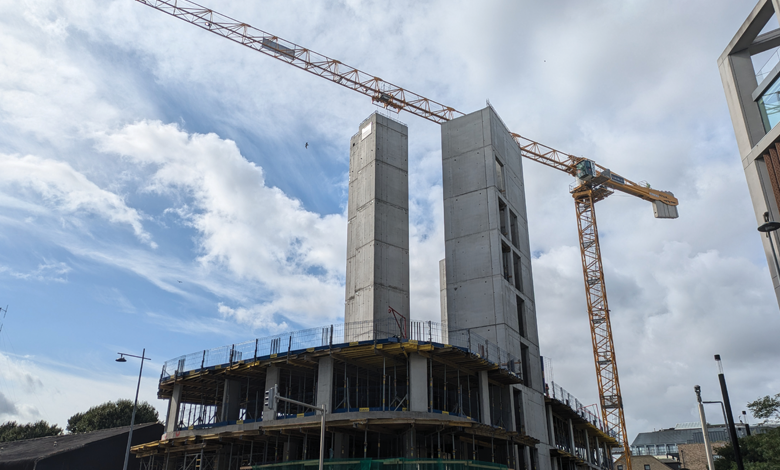
The Government has set out 30 key actions aimed at enhancing the State’s critical infrastructure, under the aegis of the Accelerating Infrastructure Report and Action Plan.
The action plan, published in December 2025 following the Government’s landmark National Development Plan Review 2025, sets out four pillars aimed at accelerating infrastructure development in light of various barriers to development, as well as challenges with the current consenting process.
Although there has been an increase in infrastructure development in recent years, historically, Ireland has maintained a comparatively modest level of infrastructure stock relative to other high-income European countries. This is primarily due to its relatively recent transition to high-income status. Constrained by limited fiscal capacity throughout the 1970s and 1980s, Ireland’s infrastructure stock was almost 50 per cent below the European average by the mid-1990s.
In 2025, the Government invested approximately €17 billion in capital projects, with NDP expenditure projected to reach €19 billion in 2026. This represents more than 5 per cent of gross national income (GNI*), placing Ireland among one of the highest capital investors in the EU and nearly quadrupling the level of investment recorded a decade ago.
According to the IMF, Ireland’s physical infrastructure stock is roughly 32 per cent below that of comparator high-income economies (covering transport, energy, water, etc.), with a 27 per cent quality deficit as well. The Irish Fiscal Advisory Council (IFAC) finds Ireland’s overall infrastructure stock is about 25 per cent below the average for high-income European countries.
The consequences of this are most acutely felt in housing provision, where construction levels have consistently fallen short of meeting the needs of a growing population, homelessness is at a record high, and the Government has consistently failed to meet annual construction targets.
The broader societal and economic impacts are also evident in declining quality of life indicators, such as urban congestion. Traffic delays result in significant time losses, with drivers in Dublin losing an estimated 81 hours annually, 67 hours in Galway, and 51 hours in Cork due to congestion. Public transport users are also affected by this congestion, which also has negative impacts on air quality in towns and cities.
Barriers to development
The Accelerating Infrastructure Report on Stakeholder Consultation and Engagement with Emerging Themes on Infrastructure, published in July 2025, forms the basis for the action plan’s 12 identified barriers to development. The 12 barriers were categorised into three broad areas:
- the regulatory environment;
- planning and legal systems; and
- internal systems.
Many of the barriers are inter-connected and have consequences for other areas of infrastructure development processes. For example, the increased risks associated with judicial reviews have lengthened approval timeframes as environmental assessments expand to react to court precedents and regulatory decisions become more cautious. The 12 barriers are identified as:
- Public acceptance: Insufficient public awareness of the consequences of poor infrastructure tends to magnify opposition.
- Increased regulatory burden: Multiple, distinct and often overlapping regulatory processes increase complexity without necessarily improving outcomes.
- Risk aversion: Threat of judicial review on procedural matters drives a culture of caution, limiting the scope for coordination and engagement that could lead to improved outcomes.
- Increasing judicial reviews: The increasing number of judicial reviews is contributing to uncertainty, longer timelines and higher cost, driving risk aversion at all other steps.
- Consequences of judicial reviews: Lack of fast track for priority projects; procedural flaws can often significantly delay infrastructure without means for consideration of wider consequences.
- Insufficiently co-ordinated approvals: Limited coordination on licences, consents, and permissions leads to duplication of efforts and sequential processes that could be conducted in parallel, saving time/money.
- Slow processes: Unclear that current procedures on project assessment add value that is commensurate with the time burden imposed.
- Inconsistent planning decisions and timelines: The extent of competing issues can lead to inconsistency and hence drive uncertainty.
- Prioritisation and co-ordination of infrastructure: Semi-state companies and regulatory agencies are often limited in their ability to prioritise and to consider wider societal aims in decision-making.
- Procurement challenges: Current processes are leading to falling competition in public tenders, impacting value for money and incentives for investment in skills/capability.
- Uncertainty of funding and project pipelines: Uncertainty around the timing and feasibility of government investment plans is limiting interest in the Irish infrastructure market among potential developers.
- Construction sector capacity and productivity: Construction sector capacity and productivity is identified as a constraint.
“There is now a systematic whole-of-government commitment to reform and to the timely delivery of the suite of actions set out in this plan.”
Current consenting process
A common theme emerging across the three sectors of water, transport, and energy is the significant volume of consents, licences, and permits that an infrastructure project potentially requires.
The action plan explains: “Although the framework that has been developed is compliant and ensures robust environmental and public health protection, it is also fragmented and involves multiple agencies, often with overlapping responsibilities. Multiple consents may be required from a variety of agencies/bodies, many of which are seeking similar information, working off different timelines, often with no prioritisation for critical infrastructure projects.”
The Planning and Development Act 2024 includes a range of reforms intended to enhance the efficiency and predictability of the planning system. A key reform is the introduction of statutory decision-making timelines for ACP, which is expected to provide greater certainty for project developers and support more timely project delivery.
However, the action plan acknowledges that there are linear processes which mean that different organisations are responsible for different infrastructure delivery processes. With the success of planning reforms introduced in 2024 yet to be seen, the action plan simply states: “Government is determined to reduce these delivery timelines through the actions set out in this report.”
Pillar one: Legal reform
“It is filled with minor tweaks to the existing system, the creation of new working groups and promises to deregulate the planning process.”
With judicial review having played a significant role in reducing infrastructure output across all sectors, the action plan contextualises that “the number of judicial reviews continues to rise”.
“2024 saw a 43 percent increase compared to 2023 and already, 2025 has seen a further 30 percent increase in the number of cases brought to the Planning and Environment Court. As of today, An Coimisiún Pleanála is facing 131 individual judicial reviews. The number of judicial reviews has increased to such an extent that the Government’s chief legal advisor, the Attorney General, has branded the proliferation of legal challenges, especially in the planning and environmental areas, as being of significant political and public concern.”
Therefore, the action plan states that there will be reform to the judicial review process which will be in line with the Aarhus Convention standards for affordability, but with a “more efficient courts system”. The plan also states that emergency legislation will be introduced by the Government in 2026, which will streamline the process for development of nationally critical infrastructure.
The action plan also outlines the aim to implement other targeted legislative reforms, progress domestic reforms to environmental assessment in parallel with the EU Simplification Agenda, increase exemption thresholds for critical infrastructure, respond rapidly to precedent, and enact the Civil
Reform Bill to legislate for judicial reviews.
Pillar two: Regulatory reform and simplification
The report identifies that Ireland’s regulatory system has grown significantly over time, with 95 bodies now having some regulatory remit, creating inefficiencies that slow the delivery of critical infrastructure such as roads, rail, electricity, and water networks. While regulation provides essential safeguards for consumers, society, and the environment, it also imposes administrative and developmental burdens that increase costs and timelines. Overly complex legislation, lack of coordination between agencies, and risk-averse interpretations of law have contributed to delays, judicial challenges, and fragmented processes. The report emphasises that regulatory reform should balance the need for protection with efficiency, adopting proportionate, transparent, and consistent measures that facilitate timely infrastructure delivery.
To address these challenges, the report outlines a comprehensive action plan, including the development of national planning statements, establishment of a regulatory simplification unit, rationalisation of legislation, and reform of agency processes. Key measures include standardising licensing and consenting procedures, implementing statutory timelines, enabling developer-led infrastructure projects, and strengthening coordination on EU legislation. Additional initiatives focus on improving the role of the Office of the Planning Regulator, integrating digital data systems, and promoting best practices in planning. Together, these reforms aim to reduce consenting timelines by up to 12 months, lower administrative burdens, provide
greater certainty for investors, and accelerate the delivery of energy, water, and transport infrastructure while maintaining societal and environmental safeguards.
Pillar three: Coordination and delivery reform
Pillar three focuses on transforming Ireland’s infrastructure delivery from a fragmented, slow, and risk-averse system into a coordinated, efficient, and outcomes-driven framework. With the ambitious National Development Plan allocating €102.4 billion for 2026-2030, the Government aims to convert funding commitments into tangible infrastructure outcomes, particularly in electricity, water, and transport. Historical delays caused by siloed responsibilities, sequential approvals, and judicial reviews have extended project timelines, impacting housing, renewable energy, and environmental compliance. To address these challenges, Pillar three emphasises stronger programme governance, integrated planning, clearer decision rights, and a culture that balances risk with timely delivery, ensuring that infrastructure supports both societal needs and national objectives.
The pillar outlines a suite of actions to achieve these goals, including publishing sectoral investment plans to create predictable project pipelines, enhancing DPER’s coordination function, introducing risk appetite statements, improving utility coordination through a joint utilities and transport clearing house, and increasing construction sector capacity through workforce expansion and modern methods of construction. Additional measures target faster project approvals, expert support for major projects via the NDFA, and procurement reforms to streamline processes, promote competition, and reduce administrative burden.
Pillar four: Public acceptance
The action plan asserts that public opposition to infrastructure projects often arises when projects affect local communities or landowners, causing delays, legal challenges, and higher costs. Building trust through transparent communication, early engagement, and practical measures like land access is described as essential to reduce resistance.
Key actions include requiring state bodies to make land available, strengthening leadership support at national and local levels, improving government communication on infrastructure benefits, and establishing a benefits realisation framework to quantify societal value. These measures aim to minimise opposition, streamline approvals, and create a coordinated environment that supports efficient project delivery.
Commentary
In his ministerial foreword, Minister for Public Expenditure, Infrastructure, Public Service Reform and Digitalisation Jack Chambers TD says: “There needs to be a fundamental reappraisal of the balance between the competing pillars of the protection that regulation affords and the timely provision of infrastructure that benefits all of society. I believe that there is a clear need for judicious and targeted deregulation.
“There is now a systematic whole-of-government commitment to reform and to the timely delivery of the suite of actions set out in this plan.”
Sinn Féin spokesperson on Public Expenditure and Reform, Mairéad Farrell TD, describes it as “a squandered opportunity to address the crises in critical infrastructure and housing”.
“The so-called ‘action plan’ announced today, involves very little action at all. It is filled with minor tweaks to the existing system, the creation of new working groups and promises to deregulate the planning process; a heap of announcements from this do-nothing government in the hope they can sit back and let big developers fix their problems.”