Supporting the most vulnerable
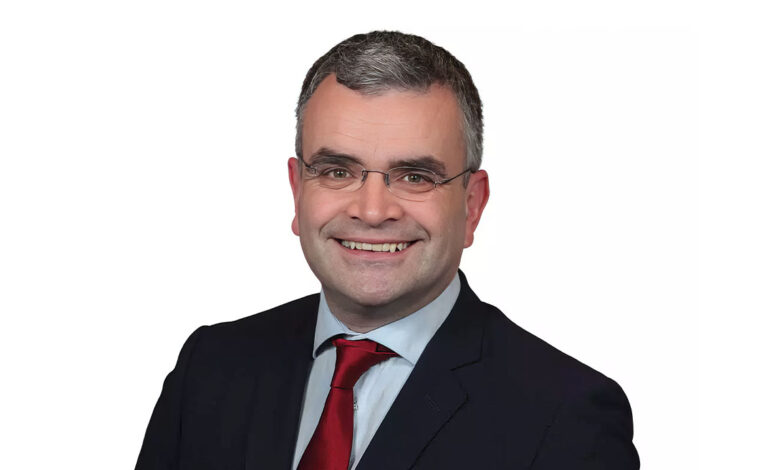
Whether it is working families and the rising cost-of-living, a person with a disability seeking meaningful employment, or a carer balancing work and care, the social protection system must be a source of security, dignity, and opportunity, writes Minister for Social Protection Dara Calleary TD.
In Budget 2026, my first as Minister for Social Protection, I secured a total budget of €28.9 billion, including a package of over €1.15 billion for new measures. During 2026, this will enable my department to advance an ambitious reform agenda; reforms designed not only to protect people today, but to build a more equitable Ireland for the future. At the heart of this work is a simple principle: a fair society is one that supports its most vulnerable and enables everyone to participate fully in our communities and economy.
Delivering auto enrolment
More than two decades after it was first discussed in Dáil Éireann, I am really proud that we have successfully delivered our key Programme for Government commitment to implement the State’s new automatic enrolment retirement savings system, known as MyFutureFund.
So far, over 763,000 employees, working for 104,000 employers have been automatically enrolled in MyFutureFund. In addition, over 5,000 employees have applied to join the scheme voluntarily, recognising the merits and benefits of being part of MyFutureFund.
MyFutureFund is truly revolutionary in terms of pensions for Ireland. It will benefit so many hard working people over the coming years and decades, making sure they have more money in retirement than they otherwise would.
Permanent cost of disability payment
One of my key priorities this year is the introduction of a permanent cost of disability payment. The Government fully recognises that disabled people face unavoidable and ongoing extra costs in their daily lives – transport, equipment, medicines – to name but a few. As such, the response will be a whole-of-government approach.
I have listened carefully to disability organisations, advocates, and individuals. Their message has been clear: support must be consistent and reflect the lived experience of disability. It will be a cornerstone reform, acknowledging that equality of opportunity requires equality of support.
Work on this is already well underway. I and my team are consulting with disabled people and their advocates, and a public consultation is currently open. This is hugely important to ensure that their voices are central to shaping this new payment. Following this work, I intend to bring a proposal to government in the coming months in advance of Budget 2027.
This new cost of disability is a statement of values. It says to people with disabilities that we recognise the real costs you face, and we support you to live full, independent lives.
Supporting meaningful employment
Financial support is essential, but it is only one part of the picture. People with disabilities consistently tell us that they want to work, contribute, and participate but that challenges remain. In 2026, we are intensifying our efforts to remove those barriers and open pathways to meaningful, sustainable employment.
This includes expanding tailored employment supports, strengthening employer engagement, and ensuring that work always pays for people with disabilities.
Ireland cannot afford to ignore talent. More importantly, we cannot accept a society where people are excluded from opportunity because of structural barriers. Our goal is clear: to create a labour market where people with disabilities have the same opportunities as everyone else to build careers, contribute their skills, and shape their futures.
In my time as Minister for Social Protection, I have met many disabled people who bring extraordinary skills and talents to their workplaces. I have seen how employers across the country also recognise the valuable contribution these employees make to their business. But we can and must do more.
Valuing carers
Carers are the backbone of our society. They provide extraordinary support – often quietly, often at personal cost – to loved ones who depend on them. In June 2026, the largest-ever increases in the income disregards for Carer’s Allowance will come into effect.
As a result, many more carers will now qualify for support. For example, a couple with a joint income of €108,000 will still qualify for Carer’s Allowance. This is a major step forward in recognising the value of care and demonstrates my commitment to ultimately phasing out the means test over the lifetime of this government.
Tackling child poverty
Reducing child poverty remains one of the most urgent social challenges facing Ireland. In Budget 2026, we delivered a substantial packaged aimed at tackling child poverty and support working families. This included the largest-ever increases in the Child Support Payment, ensuring that families have greater financial stability at a time of rising costs.
We are also extending the Fuel Allowance to approximately 50,000 families receiving the Working Family Payment, with effect from March 2026 and backdated to January 2026. This is a targeted, practical intervention that will help working families manage energy costs and reduce financial pressure during the winter months.
These measures reflect a broader commitment: to ensure that work is rewarded, that families are supported, and that no child grows up in poverty.
Roadmap for Social Inclusion
In May 2026, we will publish a new Roadmap for Social Inclusion for the period 2026-2030, setting out Ireland’s strategy to reduce poverty, strengthen social inclusion, and improve outcomes for disadvantaged groups over the coming years. This roadmap will build on the progress made to date while addressing evolving challenges.
The roadmap will be grounded in evidence, shaped by consultation, and focused on measurable outcomes. It will guide our efforts to ensure that every person – regardless of background, ability, or circumstance – has the opportunity to participate fully in Irish society.
Ireland’s EU presidency
From July to December 2026, Ireland will hold the presidency of the European Union. During this period, I will chair the EPSCO Council, which brings together EU ministers responsible for employment, social policy, health, and consumer affairs.
Our presidency will place a strong emphasis on anti-poverty, disability supports, employment participation, among other key issues. The priorities we are advancing at home will be reflected in our leadership at European level.
Ireland has long championed a social Europe. During our presidency, we will work to strengthen social protections, promote fair working conditions, and ensure that the EU remains focused on improving the lives of its citizens.
Todhchaí níos cothroime
Ní bhíonn deireadh le hobair na coimirce sóisialaí riamh. Bíonn aird leanúnach, síor-athchóiriú, agus toilteanas éisteacht agus oiriúnú de dhíth. Ach tá an chonair soiléir. Táimid ag tógáil córas a chosnaíonn daoine ar lagchuidiú, a thacaíonn le rannpháirtíocht, agus a léiríonn luachanna comhbhá, cothroime, agus deiseanna.
In 2026, trí thacú le daoine faoi mhíchumas, pinsinéirí, cúramóirí, teaghlaigh ag obair, agus grúpaí eile ar lagchuidiú, tá dul chun cinn suntasach á dhéanamh againn i dtreo Éire níos ionchuimsithí.
Tá uaillmhian simplí againn: Éire ina bhfuil deis ag gach duine a bheith rathúil.