New Council chief wants Fingal to keep leading
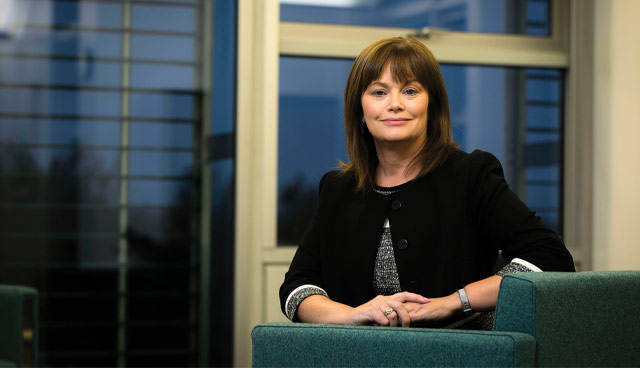
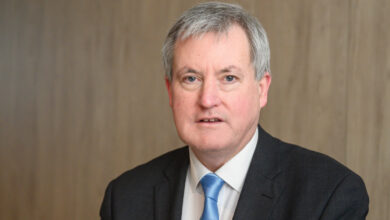
As the head of one of the most strategically important local authorities in the country the new Chief Executive of Fingal County Council, AnnMarie Farrelly, will be a key player in the future development of Ireland over the next decade.
Having been appointed as Interim Chief Executive last May following the departure of Paul Reid to become Director General of the Health Service Executive, AnnMarie Farrelly was subsequently appointed on 1 November as Fingal County Council’s sixth Chief Executive since its formation in 1994.
She is the first woman to take the helm in Fingal which is now the third biggest local authority in the country after Dublin City Council and Cork County Council. Heading up a staff of almost 1,500, she will be responsible for a budget of €269 million in 2020 and a three-year capital programme worth €619 million. The county is the fastest growing area in Ireland, having seen its population double in 25 years to 300,000, and also has the youngest, best-educated and most diverse population as well.
Farrelly is one of the most experienced local government officials in the country having started with Dublin County Council as a clerical officer. A native of Corduff, County Monaghan, she joined Fingal County Council when it was formed in 1994 following the dissolution of Dublin County Council and moved steadily upwards, eventually being appointed Director of Service in 2011. Stints in the Housing and Community Department and Planning and Strategic Infrastructure Department followed before her recent elevation to the Chief Executive’s role.
She attributes her successful rise to the career opportunities that local government afforded her during her career which included participating in a programme for Senior Executives in State and Local Government at Harvard University in 2016.
“One of the great benefits of a public service career are the many opportunities that exist in terms of education and experience,” says Farrelly. “There are opportunities to work on large scale multi-million-euro projects as well as working with Government, private sector and other stakeholders. This provides a broad level of experience, particularly in a progressive county like Fingal where there is also an openness to innovative thinking and new solutions.”
Farrelly will now bring that in-depth knowledge and extensive experience to bear in her new role as she works to meet the many demands of a county that is growing rapidly.
“The County has been transformed since the Council was established in 1994. Not only has our population doubled over the past 25 years but our rates income, which was €3.7 million back in 1994, rose to €129 million in 2019. The number of councillors has also grown from 24 to 40. This level of growth is an indication of our success but has also presented some challenges, such as the need for more housing and better infrastructure, which we will continue to address.”
Given her background, one of the key advantages that Farrelly brings to the job is a detailed knowledge of the county and its immediate and ongoing needs. She was able to hit the ground running when she was appointed, first as Interim Chief Executive, and then as the permanent leader of the organisation.
“I want to build on our achievements to date. I will work with the elected members to ensure the county continues to prosper and we protect the quality of life of the people who live here by helping to address their housing, economic and recreational needs.
“I also want to ensure that Fingal remains a vibrant, outward-looking and well-run council that embraces opportunity and diversity. We will need to take a lead on issues such as Climate Action, public transport improvement, employment and housing.
“As a local authority we need to protect, manage and improve what we have and to plan and prepare for our future sustainable growth and expansion. It is also important that we perform our core responsibilities well and I do intend to keep a focus on this area, particularly on our various regulatory roles.”
Fingal County Council is seen as one of the most effective councils in Ireland and Farrelly and her management team have several major projects in the pipeline which are being watched with interest across the country.
One of these is Project Talamh which will lead to the delivery of a mix of social, affordable and private housing on council-owned lands at Donabate, Mulhuddart and Cappagh. The recent completion of the Donabate Distributor Road has unlocked the lands at Ballymastone and will pave the way for up to 2,400 housing units plus schools, a recreation hub and a nature park.
“As a local authority we need to protect, manage and improve what we have and to plan and prepare for our future sustainable growth and expansion. It is also important that we perform our core responsibilities well and I do intend to keep a focus on this area, particularly on our various regulatory roles.”
Another is Our Balbriggan, a socio-economic regeneration project in the North Dublin town which has the youngest population in Ireland and where 32 per cent of the population were not born in Ireland. The project has generated strong buy-in locally and the Council have set themselves an ambitious target of achieving 20 things in the first year of the Our Balbriggan plan.
Farrelly adds: “Other projects include the Swords Cultural Quarter, which is a €25 million redevelopment of the area around Swords Castle and County Hall in our county town. The strategic vision for Swords is a place that will cater for future sustainable growth and will promote a thriving vibrant town. The vision seeks a comparable increase in employment and services with high density, people intensive uses in the immediate vicinity of the MetroLink route which has now been finalised.
“We are also developing the Fingal Coastal Way which, when completed, will be a dedicated walking and cycling route along the coast from Sutton to Balbriggan.
“We want to ensure a good quality of life for all our citizens both young and old and that means continuing to increase housing supply across the county and completing residential masterplans to ensure that there is sufficient land available for development. But it also means embracing change so we will deliver our new five-year Migrant Integration and Social Cohesion Strategy and the Climate Action Plan. We will shortly unveil a Digital Strategy as well and we are committed to the Council becoming a digital workplace.”
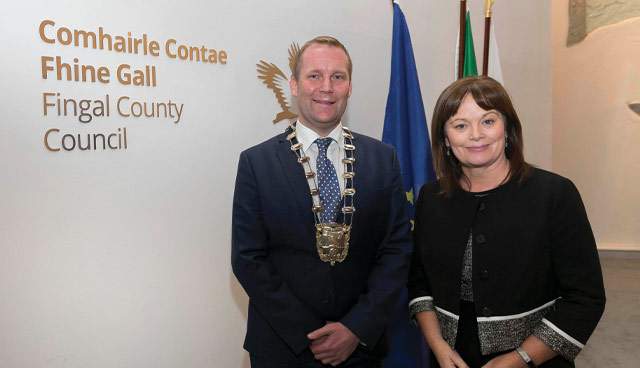
Farrelly’s appointment has been well received in Fingal where she has earned the respect of her staff, her councillors and her citizens according to the Mayor of Fingal, Cllr Eoghan O’Brien, who says: “I was delighted to support the recommendation of the Public Appointments Commission to appoint AnnMarie Farrelly. I firmly believe that she is the right person to lead our Local Authority. She is an exemplary public servant whose knowledge of the sector is second to none.”
Fingal County Council
T: 01 890 5000
E: customercareunit@fingal.ie
W: www.fingal.ie
Social: @fingalcoco