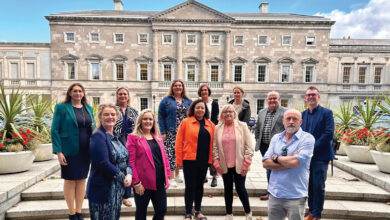
‘Nothing about us without us’
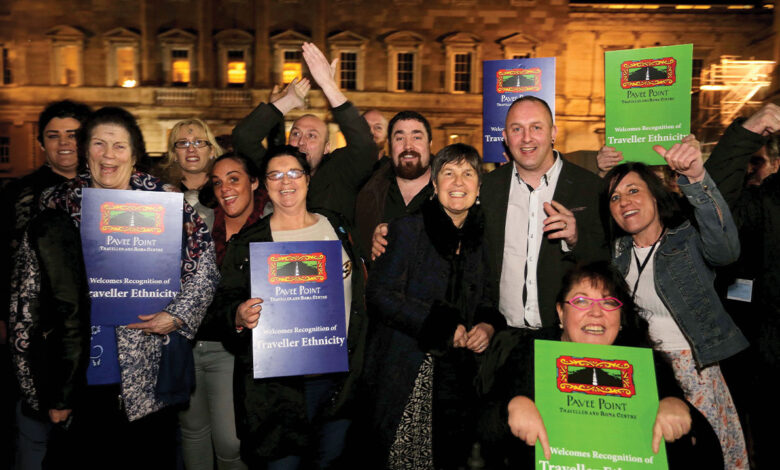
Achieving equality for, and with, Travellers and Roma requires sustained investment and political will in order to tackle pervasive systemic and social inequalities.
In 2025, Pavee Point marked 40 years of work for and with Travellers and Roma in Ireland. From the first education programme in Meath Street in 1985, Dublin Traveller Education and Development Group (now Pavee Point) has worked towards the empowerment of Travellers in Ireland; the coordination of community and collective action; and the ending of a vast web of discriminatory structures.
Traveller experiences in Ireland are marked by racism, social exclusion and long-standing inequalities which successive governments and local authorities have failed to adequately address. But more importantly, they are experiences marked by resilience, the determination of a community that has endured, organised and fought to assert its rights and dignity in the face of exclusion.
Laws on land use and public order have undermined Travellers’ right to live a nomadic way of life. Legal barriers make it harder to challenge discrimination, including in pubs and licensed premises. These laws may not name Travellers directly, but in practice they exclude communities and entrench inequality. While the recognition of Travellers as a distinct ethnic group in 2017 represented a landmark for the community, it does not disrupt the entrenched inequalities that continue to shape Travellers’ lives
Civil society organisations and national and international human rights bodies, in their reviews of Ireland’s record in implementing our international human rights law obligations, have been consistent in highlighting historic and ongoing inequalities: calling for concrete improvements by the state. Countless calls have been made to tackle systemic issues regarding low educational attainment, profound barriers to employment, and access to healthcare, to name a few areas where fundamental rights are not, or only partly, being realised.
Giving lived currency to the recognition of Traveller ethnicity requires that these calls by national and international bodies are acted upon; that discriminatory legislation is repealed; and that equality and human rights are upheld in practice.
Positive steps
The National Traveller and Roma Inclusion Strategy (NTRIS) 2017 marked the first national whole of government inclusion strategy for Travellers and Roma with Pavee Point and other Traveller organisations contributing to the development of the strategy and now overseeing its implementation. The second iteration of NTRIS, with particular focus on questions of discrimination, addresses inequalities in areas such as health, education, housing, and employment.
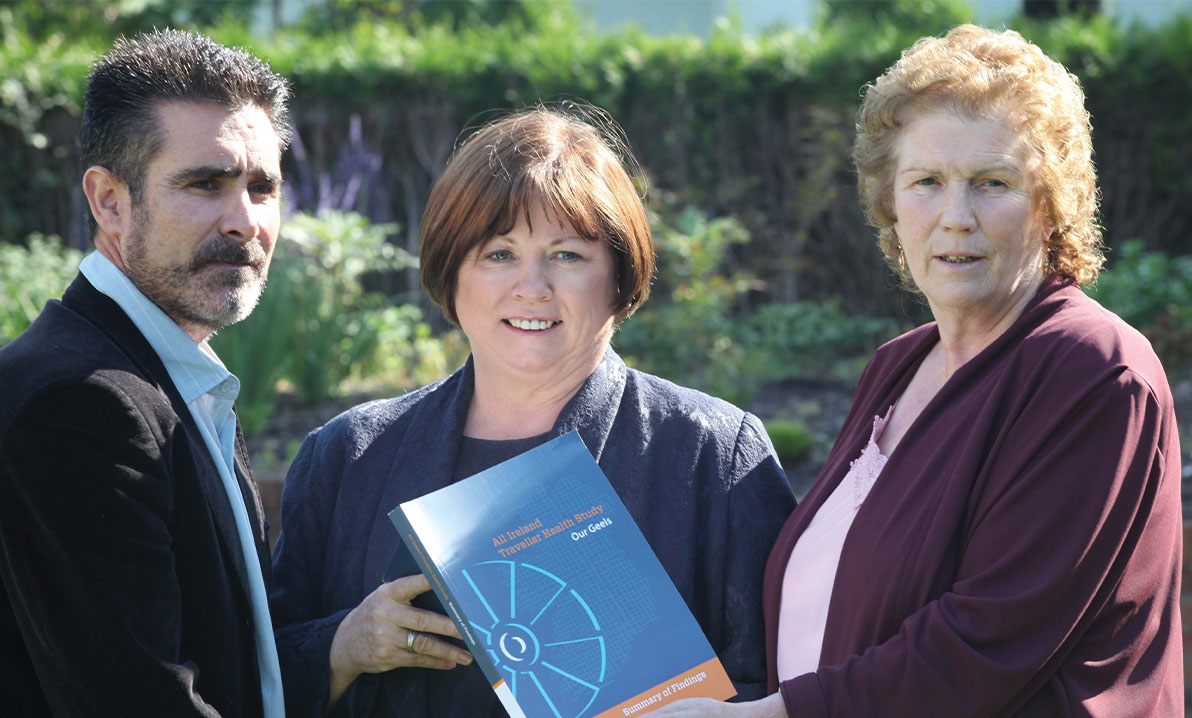
Sustained advocacy work followed the publication of Our Geels: All Ireland Traveller Health Study in 2010, and the National Traveller Health Action Plan 2022-2027 was developed to address the severe inequalities and social determinants of health affecting Travellers. Building on the work of NTHAP, and under the remit of NTRIS II, the Roma Health Action Plan became the first Roma-specific health plan to address unique barriers faced by the Roma community. NTRIS II also includes an evaluation of the national network of Primary Health Care for Travellers Projects (PHCTP), an initiative began by Pavee Point in 1994, in order to strengthen these Traveller-led health interventions across the country.
Pavee Point, and other Traveller organisations and groups working with Roma, was also actively involved in the development of the first Traveller and Roma Education Strategy (TRES). This is the first national strategy to address the Traveller and Roma educational inequalities and aims to ensure that Travellers and Roma have equality of access, participation and outcomes at all levels of education and throughout the education workforce.
NTRIS II, alongside the National Action Plan Against Racism (NAPAR), includes commitments by the State to address anti-Traveller and anti-Roma racism. This includes Traveller and Roma specific cultural awareness and anti-racism training to be introduced across the public sector: working to address the role of institutions in reproducing systemic racism.
With regards to employment, a Public Service Traveller and Roma Internship Programme was started to increase representation within the public sector. The Special Initiative for Travellers (SIT) aims to increase engagement with employment programmes.
There are positive outcomes from these policy initiatives, and a large proportion of credit there goes to the work of Traveller organisations on the ground, particularly that of Primary Health Care for Travellers Projects (PHCTP). For example, the overall life expectancy of Travellers has changed, with more Travellers living over the age of 65; Travellers have gained greater access to mainstream services, including higher rates of health screenings; and there are higher rates of health literacy amongst Travellers.
Despite such positive developments, structural factors relating to over-policing; lack of culturally appropriate accommodation; and a lack of sustained funding, across the necessary sectors, hinder the full realisation of the appropriately ambitious aims of NTRIS II and other government policies. The continued absence of ethnic data collection across state agencies and services, conducted in line with human rights standards, produces policy blind spots when it comes to responsive action.
In this way, securing long-term social and systemic equity for Travellers and Roma requires structured and sustained political; cultural; and financial investment.
Making ‘good’
Speaking at the recent launch of a Pavee Point/EU Fundamental Rights Agency (FRA) partnered nationwide survey concerning Traveller and Roma rights, Senator Eileen Flynn vividly recounted practices and instances of exclusion that continue to affect Travellers to this day.
Senator Flynn described living a double life as a Traveller: one life amongst Travelling People; and another life amongst settled people. As she socialised with her peer group as a young woman, she felt herself having to hide the fact that she was a Traveller; unable to take pride in her identity as a Traveller.
The FRA survey underlined the alarmingly high levels of day-to-day racism and discrimination faced by Travellers and Roma in Ireland: 75 per cent of Travellers experiencing instances of discrimination in the year before the survey; and 60 per cent of Roma disclosing similar instances of discrimination. The findings underline that a robust response is required in order to achieve any sort of equality for Travellers and Roma, with particular attention needed to address the systemic inequalities and racism that impact on both groups.
While that same survey pointed to incremental progress made in terms of Traveller inclusion in health, education, and employment, Senator Flynn described the situation as one only moving from “very, very bad” to “very bad”. In order that the lived experience of Travellers and Roma might one day be described as “good”, it is essential that policymakers make good on the promises made to Traveller and Roma communities.
W: www.paveepoint.ie