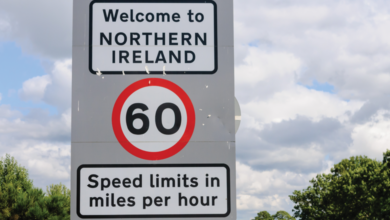
Maximising economic opportunities across the island
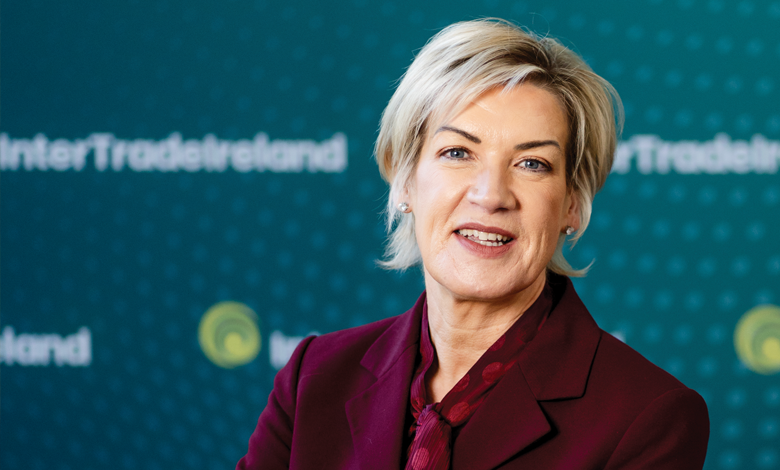
With all-island trade now at an all-time high, eolas Magazine talks to InterTradeIreland Chief Executive Margaret Hearty to find out why it has never been more important to harness the opportunities in the cross-border market, and how the organisation’s strategic priorities will support indigenous SMEs to do just that.
As global trading uncertainty continues and supply chains realign, regions that collaborate effectively are gaining an advantage. Across the island of Ireland, cross-border business activity has become a crucial source of both resilience and growth for indigenous firms.
For many SMEs, the cross-border market is the most accessible route to scale, allowing them to grow, innovate, and build their export capability without the cost and risk associated with more distant markets. Given the challenging trade environment, ensuring businesses can access these opportunities and supporting collaboration that translates into economic impact, is an increasingly important policy priority.
“In an uncertain global economy, businesses gain real benefit from markets and partnerships closer to home,” says Margaret Hearty. “Strengthening economic links across the island gives our indigenous SMEs a platform to build scale and compete internationally.”
Established under Strand Two of the Good Friday Agreement, InterTradeIreland has a unique mandate to support economic cooperation across the island. In doing so, it contributes directly to the delivery of Programme for Government commitments in both jurisdictions on growth, productivity, and regional economic development. In practice, this means helping businesses trade, innovate, collaborate, and scale using the opportunities available in both economies.
InterTradeIreland’s work is underpinned by its research and engagement activity, which provides policymakers and businesses with a shared evidence base on trade, competitiveness, and enterprise growth. The most recent data show cross-border trade continuing to expand, while its All-Island Business Monitor, a quarterly survey of 750 SMEs, shows that those active in the cross-border market typically demonstrate stronger profitability and growth.
As Hearty explains: “What we consistently see in the data is that firms trading across the island are more resilient and more likely to grow. Our role is to make it easier for businesses to access those opportunities.”
The cross-border market provides a practical first step into exporting for many SMEs, allowing them to build their confidence, capability, and supply chains before expanding into more distant markets. Liscarroll Engineering in County Cork illustrates how this works in practice. Supported by InterTradeIreland, the dairy equipment manufacturer expanded sales into Northern Ireland, increasing cross-border trade from between just 1-2 per cent of turnover to 16 per cent. Success in the cross-border market helped the company to go on to secure new business right across Great Britain.
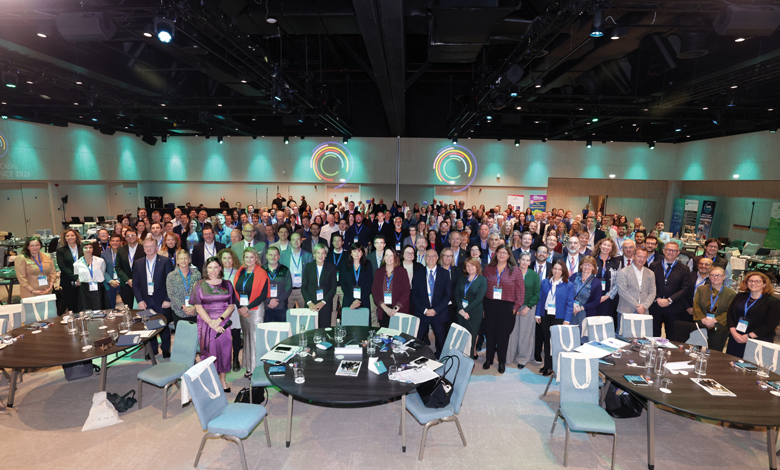
Hearty notes: “Success in the cross-border market builds the confidence and capability needed to compete internationally. Our experience shows that many businesses who take that first step then go on to export off-island.”
While many businesses have enjoyed success by first trading across the border, others are also benefitting from participating in all-island clusters and networks. With a direct mandate to lead economic collaboration across the island, InterTradeIreland’s role as a connector and convenor between businesses, academia, and policymakers is crucial to unlocking those opportunities.
For ambitious SMEs, the challenge is often not a shortage of ideas but access to the finance, skills, and networks that enable them to scale and turn those ideas into economic reality. InterTradeIreland’s investor readiness competition, Seedcorn, mirrors the fundraising process for startup and early-stage firms with a panel of expert judges. Regional finals and a special sustainability prize fund mean that the whole island’s talent can be involved.
Recent winners include Limerick-based supply chain decarbonisation platform Mavarick AI, and Cork based biotech spinout Arraypatch. Through Seedcorn, an annual Venture Capital Conference, and a suite of funding advisory offerings, InterTradeIreland connects entrepreneurs across the island to secure investment, refine their market proposition, and scale their business.
Another significant policy focus for both governments is cluster development. International evidence shows that SMEs especially benefit from cluster participation, because the shared expertise and resources that they can access allows them to grow more quickly. Collaboration offers a scale that neither economy would be able to offer on its own, and this allows cross-border clusters to compete internationally.
A key theme of the Irish Government’s Shared Island Enterprise Scheme has been clusters; InterTradeIreland has been central to this work, organising the global TCI clustering conference in Dublin in 2025 in partnership with Invest Northern Ireland and Enterprise Ireland and leading the development of all-island clusters in strategically important sectors.
The Fintech Corridor demonstrates how this approach has already delivered results. With InterTradeIreland as its lead partner, the initiative links companies across cybersecurity, payments, and emerging financial technologies, helping firms collaborate, enter new markets and attract international investment.
A central focus has been addressing skills gaps through partnerships with education providers along the Dublin–Belfast corridor, including establishing a new Fintech Academy, postgraduate qualifications, micro-credential programmes and specialist training. Through partnerships with universities, institutes of technology, and industry, the initiative has created the island’s first coordinated fintech ecosystem supporting internships, apprenticeships, and skills development.
As Hearty highlights: “Businesses scale faster and are more competitive when they can access the right markets, partners, and expertise. Our role, and it is central to everything we do, is to make those connections together across the island so firms can compete and grow more effectively than they would working on their own. For the ambitious business, the border is not a barrier: it is a launchpad.”
As global markets become increasingly volatile, the most effective tool for an SME is a strong regional network. By bridging the gap between North and South, InterTradeIreland is building an island-wide engine of competitiveness and resilience. Strengthening these practical links ensures that firms in both jurisdictions do not just survive in the changing global economy but can lead it.
Visit www.intertradeireland.com to find out more about how InterTradeIreland connects business to opportunities across the island.