Maria Walsh MEP: Ireland must lead in criminalising devastating deepfakes

Following widespread AI generation of ‘deepfakes’, most prominently on the X AI bot Grok, Fine Gael MEP Maria Walsh asserts that Ireland must take the lead as Europe seeks to criminalise deepfakes.
Almost two years ago, I stood in the European Parliament and warned of a looming threat: the rise of sexualised deepfakes targeting women and girls. Back then, it felt almost futuristic; a technological unknown better suited to a science fiction thriller than our everyday reality.
Sadly, however, that warning has been borne out as we have seen women and young children abused by Grok and other AI platforms in recent months.
I believe that deepfakes represent the next frontier of gender-based violence. As defined by the Cambridge Dictionary, a deepfake is “a video or sound recording that replaces someone’s face or voice with that of someone else, in a way that appears real”. What makes them so dangerous is not just their realism, but their speed, reach, and the near impossibility of retracting them once published.
Most deepfakes involve non-consensual sexual imagery, and women are overwhelmingly the victims. 96 per cent are sexual images or videos, with women and girls making up 99 per cent of those targeted. These videos, superimposing a person’s face onto explicit scenes without consent, are designed to intimidate, control, and humiliate. Careers, reputations, relationships, and personal lives are all at stake.
Beyond the personal consequences, deepfakes actively discourage women from participating in public life, politics, or careers that place them in the public eye. A study from University College Cork found that one-in-five people who watched deepfake videos of Irish politicians formed false memories of events that never occurred, showing just how deeply these technologies can distort reality.
For too long, victims have had no clear road to justice. The law is struggling to keep pace with AI’s rapid advancement, leaving individuals feeling helpless. The EU’s Digital Services Act and AI Act are important steps, but they do not go far enough to address sexual deepfakes. Having worked on this issue since the beginning, I believe the EU is failing to keep our women and girls safe online. While I first raised the issue of deepfakes almost two years ago, only last month did we see the Commission begin an investigation into Grok for their deepfake technology.
This is where Ireland has a responsibility to lead. Our country is home to the European headquarters of many of the world’s largest social media companies, including X. With this comes a moral obligation to lead within the EU, demonstrating that the creation and sharing of non-consensual deepfake content is not tolerated.
National legislation explicitly criminalising the creation and sharing of sexual deepfakes is urgently needed. It is not enough to rely solely on voluntary measures from tech companies nor wait for the EU to catch up. Strong laws must set clear penalties, hold perpetrators accountable, and offer victims real avenues for justice. Ireland, with its upcoming presidency of the EU Council in July 2026, can and should lead the charge at a European level, setting a standard for others to follow.
This is a once-in-a-decade chance to leave a lasting legacy in Europe: a safer digital environment where women, children, and all citizens can participate freely without fear of manipulation or harassment.
However, legislation alone is not enough. We need technological solutions to detect and prevent harmful content from spreading in the first place. We need education programs to raise awareness among the public about the dangers of AI-generated sexual content. Social media companies must step up their monitoring and reporting mechanisms, ensuring victims are supported and abuse is curtailed before it goes viral.
The consequences of inaction cannot be underestimated. Deepfakes threaten political integrity, distort public debate, and erode trust in our institutions. But most critically, they inflict real harm on real people; women and children whose lives can be turned upside down in an instant. I have heard countless stories in my constituency and across Europe of individuals whose images or voices have been misused in this way. The trauma is profound.
I remain committed to this cause, advocating at every level for laws, tools, and awareness campaigns that safeguard our citizens. In March 2026, I am travelling to the United Nations on behalf of the European Parliament armed with a very clear message; deepfakes are the next frontier of gender-based violence. As the lead negotiator for the EPP, the Parliament’s largest political group, on the EU’s priorities for the 70th session of the United Nations Commission on the Status of Women (CSW), I will be ensuring deepfakes are on the political agenda in New York.
Deepfakes are not just a technological threat; they are a societal challenge, a gender equality issue, and a call to moral action. By taking bold steps today, Ireland can protect victims, restore trust, and lead Europe in confronting this new frontier of digital abuse.
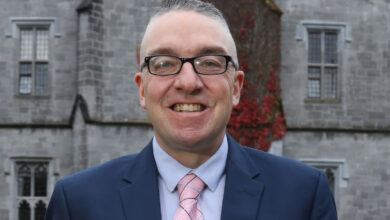
| Maria Walsh MEP has been a Fine Gael Member of the European Parliament for the Midlands–North-West constituency since 2019. |