Coimisiún na Meán’s online safety mission

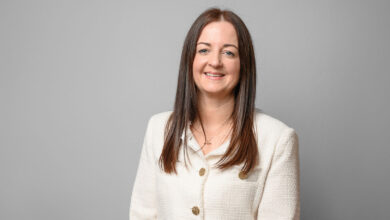
My name is Niamh Hodnett and in 2023, I became Ireland’s first Online Safety Commissioner. The same year, Coimisiún na Meán was established with the ambition to develop and regulate a thriving, diverse, safe, and trusted media landscape for Ireland.
Working alongside my four Commissioner colleagues, An Coimisiún is Ireland’s online safety regulator, we also regulate broadcasters and video-on-demand service providers, and we provide funding support for television and radio programming and high-quality independent journalism.
Since our establishment, Coimisiún na Meán have accomplished a lot in a relatively short amount of time. We have grown from an organisation of 40, to over 260 today, and have built our capacity across our functions, including policy, research and strategy, platform supervision and investigations, media development and broadcasting and video-on-demand licensing and regulation.
As Ireland’s Online Safety Commissioner, I am responsible for the development of Ireland’s regulatory regime for online safety – the Online Safety Framework. Since July 2025, the Framework is now fully in place, consisting of the EU Digital Services Act (DSA), the EU Terrorist Content Online Regulation (TCOR) and the Online Safety and Media Regulation Act, the basis for our Online Safety Code. The Online Safety Framework makes online platforms accountable for how they protect people, especially children, from harm online.
This Framework has rebalanced the relationship between users and online platforms, and has provided new rights for people, and additional obligations on platforms. This includes the right for users under the DSA to report illegal content through a user-friendly and accessible reporting mechanism, and the obligation for platforms to deal with these reports. Platforms also have to establish terms and conditions which outline what content and activity they do and do not allow on their services, and to enforce these terms and conditions diligently. Further, if you report content and the platform decides not to take action on it, you have a right to appeal that decision.
The Online Safety Code was the final piece of the puzzle and is fully in force since the summer. Under the Code, several of the large video-sharing platforms are required to provide additional protections for children. These include restricting videos which promote eating and feeding disorders, suicide and self-harm, dangerous challenges and cyber bullying. It also restricts video content which incites hatred or violence on the grounds of protected characteristics as well as child sex abuse material and terrorism. Video-sharing platforms that allow adult-only video content, including pornography and extreme violence, must have in place effective age verification to ensure that children do not encounter these types of content.
The Code was developed following extensive consultation with the public and civil society organisations and was made with the protection of children in mind. Our own Youth Advisory Committee was central to the development of the Code and serves as an important forum for us to hear the views of children and young people when developing policy with their interests in mind.
With the Framework fully in force, we are now supervising the online platforms established in Ireland for their compliance. Our ambition is to drive behavioural change from the online platforms and for platforms to develop their systems with safety in mind. If a platform fails to meet their obligations under the Framework, we will not hesitate to act, with significant financial sanctions as a potential consequence.
A crucial part of my role as Online Safety Commissioner is meeting with other regulators, establishing opportunities for co-operation and listening to those most at risk of harm online. Since I started, I have met with teacher organisations, parents’ groups, cyber safety advocates and representatives of minority communities. We have also established several co-operation agreements with other regulators including the Competition and Consumer Protection Commission (CCPC), the Data Protection Commission (DPC) and the Advertising Standards Authority (ASA). In November 2025, I was selected as Chair of the Global Online Safety Regulators Network, where regulators and observers from across the world work together to ensure that online safety is not limited by national borders.
Our Contact Centre plays a vital role in keeping us informed of people’s online experiences and can provide advice and support for people who see or hear something online that they do not think is right. The information gathered by the Contact Centre helps us to build a case for enforcement where we can identify patterns of non-compliance by platforms.
As a regulator, our priority is keeping people, especially children, safe from harm online and informing people about their rights and how to use them. Our message is clear; users have new rights online, and platforms have new obligations that did not previously exist.
By reporting content that you believe to be illegal, or against a platform’s terms and conditions, you help us to put the platforms on notice and to hold them accountable. If you have difficulty in reporting content online, or if you are unhappy with the response from the platform then please get in touch with us and we can help provide you with the right kind of support. Every report and every contact we have contributes to our supervision and enforcement work with the online platforms. In turn this helps to make the online space safer for everyone. Your report matters.
Coimisiún na Meán’s Contact Centre is open from 8am-6pm, Monday to Friday
T: 01 963 7755
E: usersupport@cnam.ie
W: www.cnam.ie