Building better: A sensitive approach to retrofitting traditional buildings
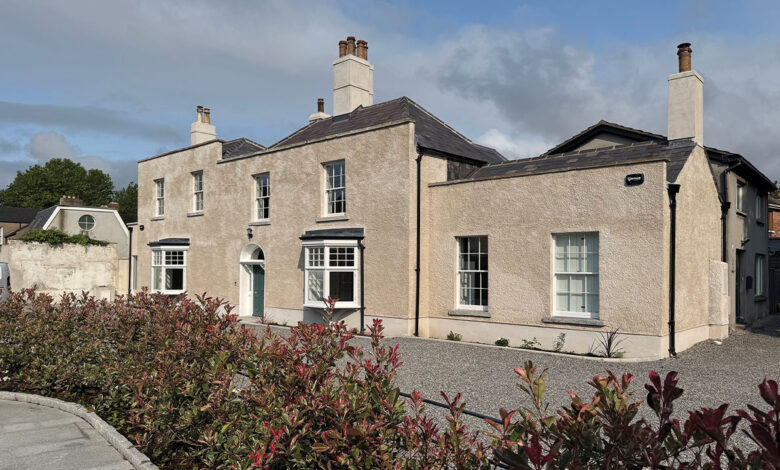
As Ireland accelerates efforts to improve the energy performance of its existing building stock, traditional buildings present a significant opportunity to increase energy efficiency, as well as specific challenges, writes Niall Crosson, Group Technical Director, Ecological Building Systems.
These buildings form a substantial part of our country’s landscape, and their retrofit requires a sensitive, informed approach, one that improves comfort and efficiency while respecting historic fabric, performance and character.
Traditional buildings need a sympathetic approach to retrofit because they are constructed and perform in fundamentally different ways to modern buildings. This has been clearly outlined in the recently-published government guidance Improving Energy Efficiency in Traditional Buildings. Built with breathable materials such as stone, brick, timber and lime, these buildings manage moisture through natural evaporation rather than impermeable barriers.
SPAB, the RIAI and other conservation bodies consistently emphasise minimal intervention, repair over replacement, and the use of compatible materials to avoid trapping moisture and causing long-term damage. Retrofit measures must respect historic fabric, architectural character and traditional performance, ensuring energy improvements enhance comfort and sustainability without compromising durability, significance, or the building’s ability to breathe.
At its core, building better in traditional buildings is about balance. Rash interventions and the use of inappropriate impervious insulation or decorative finishes can cause long-term harm. It is essential that these buildings continue to provide safe, healthy and beautiful places to live and work, while remaining viable and relevant long into the future.
Why traditional buildings require a more sympathetic approach
Traditional buildings are typically constructed using permeable materials and assemblies that rely on moisture movement and evaporation to maintain fabric health. Building elements are in a constant state of flux, moving between moisture absorption and desorption. Thermal upgrades must respect and preserve this hygrothermal behaviour.
The inappropriate use of impermeable materials risks moisture entrapment, fabric decay and long-term deterioration. Desktop hygrothermal assessment tools, such as WUFI, a support service supplied by Ecological Building Systems, assists in assessing moisture risk and identifying the most appropriate thermal solution.
The historic fabric of traditional buildings embodies their architectural, cultural and evidential significance. Thermal interventions should minimise harm, avoid unnecessary loss of original material and, where possible, be reversible, in accordance with established conservation principles.
Traditional buildings also exhibit thermal performance characteristics that differ fundamentally from modern construction, often relying on thermal mass and vapour-permeable materials to regulate internal conditions. Retrofit strategies must therefore adopt a whole-house approach, informed by a thorough understanding of traditional construction methods, to avoid inappropriate or ineffective interventions.
The application of modern impervious paints, finishes and synthetic insulation materials can disrupt moisture movement, increasing the risk of condensation and fabric deterioration. Achieving an appropriate balance between energy conservation and a moisture-open thermal strategy, while also reducing draughts through improved airtightness and providing effective ventilation, is essential to delivering a comfortable, resilient and durable retrofit solution.
Inappropriate thermal upgrades can introduce unintended consequences such as condensation, timber decay, masonry damage or reduced indoor air quality. A conservation-led approach requires holistic assessment of building fabric, ventilation and use, ensuring that energy efficiency improvements enhance, rather than compromise, long-term sustainability.
Learning from traditional buildings
In a changing climate, contemporary construction can learn much from our forebears. Thousands of traditional buildings across Ireland stand as proof of their resilience and durability. They respond to local climate through generations of knowledge, using locally sourced materials, regional craftsmanship and a clear focus on longevity.
From the thatched cottages of Donegal to traditional farmhouses across the Lake District in the UK, these buildings are deeply rooted in place. They embody principles now recognised as essential: reuse of materials compatible with both building fabric and climate, adaptable use of space, and careful material optimisation. Thermal stability, thoughtful use of light and natural airflow combine to create robust and sustainable building fabric.
In many cases, demolition and replacement carries a significant carbon burden. Refurbishment, by contrast, is key to retaining built heritage, providing much-needed housing and reusing materials with minimal environmental impact. Like fingerprints, no two traditional buildings are the same. There are no quick wins when it comes to their thermal refurbishment.
Successful outcomes come from careful assessment and a considered, sensitive approach, that retains key architectural features while delivering meaningful thermal improvements through breathable materials and finishes.
Building better in practice
For over 25 years, respect for tradition and the unique qualities that define traditional buildings has driven our work at Ecological Building Systems. At our heart is providing best-practice guidance with integrity and seeking appropriate thermal solutions and decorative finishes, solutions that work with the building fabric and deliver comfort and stability, ensuring buildings remain warm, characterful and enduring for decades to come.
As conservation architect Fergal McGirl FRIAI notes: “The area of retrofit of historic buildings is a challenging one that requires careful technical and heritage assessment of the structure’s characteristics to ensure appropriate approaches are followed. Ecological Building Systems have developed a suite of materials in recent years that are compatible with traditional buildings and offer flexible solutions to a number of the issues that arise.
“During the Cherrymount House, Phibsborough project, the technical staff provided comprehensive advice and risk assessment at specification stage that was supported by site inspections during construction stage to maintain quality control.”
In my experience, after almost 25 years in building, one thing has remained constant: people value beauty, comfort and stability. This was true when our earliest ancestors sought refuge in Neolithic caves, and it remains true today in low-energy contemporary buildings.
At its simplest, building better should give occupants a sense of wellbeing, comfort and solidity, equally applying to traditional and modern construction. As we look ahead, we are choosing to lean more clearly into what has always guided our work: building better.
T: +353 46 9432104
E: info@ecologicalbuildingsystems.com
W: ecologicalbuildingsystems.com
Ecological Building Systems
Main Street, Athboy,
County Meath