Addressing the biodiversity crisis
 Jane Stout, professor of ecology in the School of Natural Sciences and vice-president for biodiversity and climate action at Trinity College Dublin, outlines the stats behind Ireland’s biodiversity crisis and the steps that must be taken to address it.
Setting the global context for biodiversity, Stout references Planetary Health Check 2025, published in September 2025, which finds that seven out of nine planetary boundaries have been breached. The planetary boundaries are critical global processes that regulate Earth’s stability and resilience.
Ocean acidification is the latest boundary to be breached and Stout indicates that this is attributable to CO2 build-up. She explains that this has “massive ramifications for marine life”, which in turn “has consequences for humanity”.
Stout outlines how The World Economic Forum’s Global Risks Report 2025, published in January 2025, identifies environmental issues as the top four long-term risks. Biodiversity loss and ecosystem collapse is the second biggest risk.
Good news
Stout asserts that the Citizen’s Assembly on Biodiversity Loss held in 2022 should be celebrated. She also lauds the opening of two new national parks, and peatland rehabilitations by Bord na Móna. Nearly all local authorities on the island now have a biodiversity officer and are developing local biodiversity plans.
Furthermore, species such as corn crakes and curlews are “coming back in areas that have been restored”. Stout continues: “We can restore nature, it costs a lot of money and it takes a lot of people working together to do so.”
“We must not ignore nature in our decision-making. We need to embed the financial and non-financial values into our decision-making processes.”
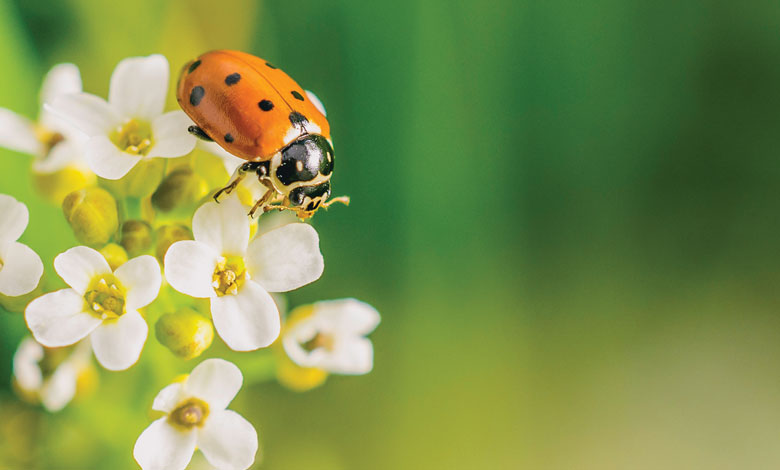
The biodiversity expert also labels the All-Ireland Pollinator Plan, which she co-developed with senior ecologist at the National Biodiversity Data Centre Úna FitzPatrick, a “success story”. Stout says it facilitates an environment where pollinators can “survive and thrive”.
“This has influenced what is happening at a European level. Ireland is seen as a leader in pollinator conservation because of the Pollinator Plan.”
Challenges
Stout acknowledges that there are “still an awful lot of challenges” including water quality and nitrates. She continues: “We have issues with funding. Nature restoration is extremely expensive. We see a lot of public and political apathy.”
However, Stout asserts that there is ample policy regarding biodiversity at global and national level despite repeated calls for the Government to provide more policy. “The EU Nature Restoration Regulation could be an absolute game-changer,” she continues.
The regulation is a “long-term holistic plan for restoration of nature with specific targets across urban, agricultural, and forest ecosystems”. It sets targets to restore at least 20 per cent of land and sea by 2030 and all ecosystems in need of restoration by 2050.
The Trinity professor states that plants make up most of the Earth’s biomass while insects are “the most diverse group of animals on the planet”. Asserting that “nature still has a PR problem”, Stout explains that this is partly because plants and insects are “mostly silent”, and virtually invisible. “A lot of our insects are very highly mobile, so we do not notice when they are gone,” she adds.
Farming
Stating that 70 per cent of Ireland is farmed, Stout explains that the majority of farmed land “is improved agricultural grassland” which means there is a low diversity of species. She says this is “a shame”, adding that biodiversity “can really benefit farming” and provide “extra benefits for society”.
She asserts that farming can be done “in a more biodiverse way”, adding that biodiversity can be engineered into more intensive farming as well. The Trinity professor discusses Farm Zero C, a project which aimed to make an intensive dairy farm in Shinagh, west Cork become carbon neutral while remaining economically viable. Stout indicates that this project proves that “you can increase biodiversity in very intensive farmland”.
Stating that there is a cost to this, Stout discusses how another project titled ReFarm aims to address this by directing “finance from corporates to farmers so that they can do something for nature on their farmland”.
The biodiversity expert asserts that education at all levels “is absolutely key”. She states that people are well-educated on biodiversity at primary school level, but this wanes as they progress through the education system. By the time people enter the workforce, they demonstrate a “lack of urgency, lack of knowledge, and apathy for nature”.
“We must not ignore nature in our decision-making. We need to embed the financial and non-financial values into our decision-making processes,” she says.
Stout outlines five key things that can be done to address the biodiversity crisis, the first of which is to implement existing policy. Second is that there is engagement with the private sector “in a more meaningful way” to acquire investment, but also to ensure the private sector “pays for the damage that it does”.
Thirdly is that farming needs to be done in a more environmentally, socially, and economically sustainable way. Fourth is that communities need to be involved. Fifth is that lifelong education is provided and the need for biodiversity awareness is increased at all levels.
Concluding, Stout says: “We are lucky in Ireland, we have fantastic diversity of nature. We see it all around us every day. It is a hard to believe we are in a crisis but we are, so we do need to take these steps to address it.”