
Accelerating Ireland’s infrastructure

Following the Government’s announcement of the Accelerating Infrastructure Report and Action Plan, Jacobs hosted experts from across the public and private sectors for a round table discussion on accelerating Ireland’s infrastructure.
How can we accelerate infrastructure delivery while protecting the public’s right to be heard and building social acceptance?
Kevin Buckley
Opposition to infrastructure often dominates debate while wider public benefits are ignored. Ireland must
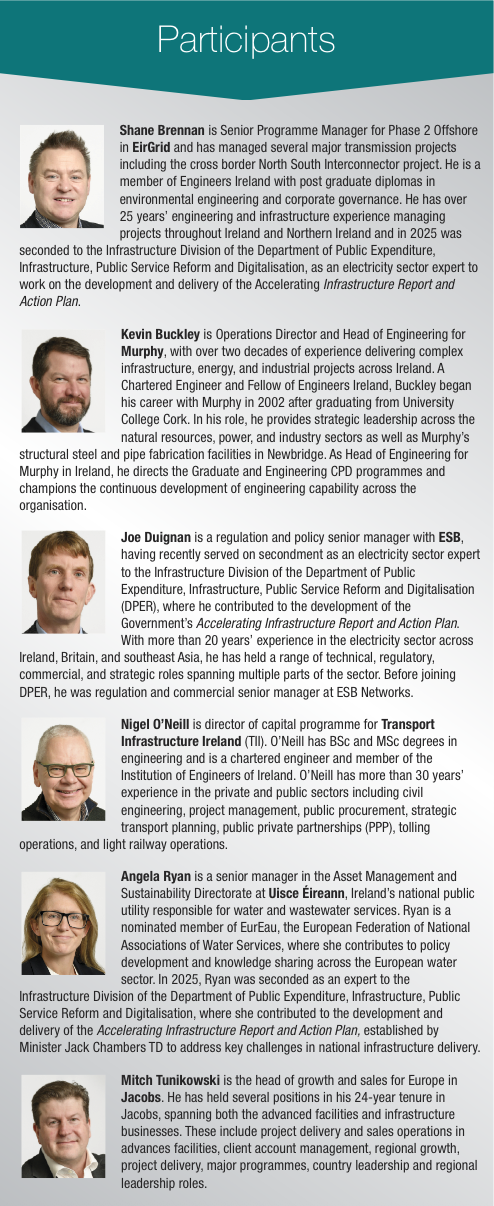
improve how it communicates the value of major projects before they enter planning. The Government’s Accelerating Infrastructure Report and Action Plan provides 30 actions and clear timelines; delivery now depends on implementing them. Early engagement is critical. Examples such as grid projects show that meeting communities early, listening to concerns, and adapting proposals can smooth the path to approval. This approach should be standard practice. If we engage sooner and demonstrate national and local benefits clearly, we can reduce resistance and build broader support.
Shane Brennan
Over the past five years, we have embedded community forums wherever projects are developed, where we involve communities, volunteers, and local politicians in decision-making from the earliest stage of delivery on routes, options, and technology. That participation helps people understand the project benefits early on and enables everyone to find the least impactful solution for communities while still delivering a stronger and better electricity grid. We pair this with community benefit funds to provide direct benefits to communities who are closest to new transmission infrastructure. This fund can help communities transform their area supporting sustainability, community facilities and biodiversity, with communities helping to decide how the money is allocated. The establishment of a forum, paired with benefit sharing has delivered real results: several projects passed planning quickly with few objections and no planning hearings. Still, we must keep improving the communication of benefits from infrastructure projects. Government advocacy and leadership is essential too, especially in promoting wider economic and social gains linked to infrastructure.
Angela Ryan
Uisce Éireann is committed to early stakeholder engagement with communities and individuals who may be impacted by our projects. Dedicated liaison teams meet individual landowners multiple times, gathering feedback and adjusting designs to reduce impacts long before planning submission. We also progress extensive public information events. The goal is to address as many issues as possible before a design is finalised and the planning application is lodged. A good example of this is the Water Supply Project – East and Midlands Region. The proposed pipeline for this project will interface with 500 landowners. Through the development stages, there were over 20 engagements with each individual landowner, and over 30 per cent of all change requests could facilitated for pipeline route alignment based on engagements. In 2025, in partnership with the Irish Farmers’ Association (IFA) and the ICMSA, a voluntary land and wayleave package was developed which over 75 per cent of landowners had signed up to before the planning application was lodged. However, it is critical that support for major infrastructure extends beyond project promoters. Where projects are in the national interest or the greater “common good,” government regulators and public bodies must have a greater role in enabling a greater understanding. The public acceptance pillar of the Accelerating Infrastructure Report seeks to address this. Ultimately, water, energy, and transport infrastructure is publicly owned and serves everyone. The right to be heard is already embedded at many statutory stages. Judicial review should remain a final safeguard rather than a default step, and must have consideration of the common good.
Nigel O’Neill
Projects are effectively paced by the last objector, which leads to irrational timelines. Planning and permitting now take so long that total lifecycles are stretching toward decades rather than years. Delays stem from overlapping consents, conflicting or shifting rules, and policy churn. Other regions show reform is possible: strong environmental protections can remain without enabling endless obstruction. We already know most citizens want water, energy, and transport delivered faster. The accelerated infrastructure framework identifies what to change; it should be implemented firmly. Where objections arise to reform itself, political leaders must stand behind the broader public interest.
Joe Duignan
Building social acceptance is integral to sustainably accelerating infrastructure delivery. That means being far clearer about the benefits of infrastructure and also the cost of doing nothing. In line with the Government’s Accelerating Infrastructure Report and Action Plan we must tell that story better. Consultation through the development of national planning statements and local area plans can build shared understanding early, making infrastructure delivery smoother. The reform agenda ensures that participation rights are built into multiple steps and this will remain. In fact, many actions should strengthen trust and transparency. Implementing the full plan, including the elements around communication and public acceptance, is essential to moving faster.
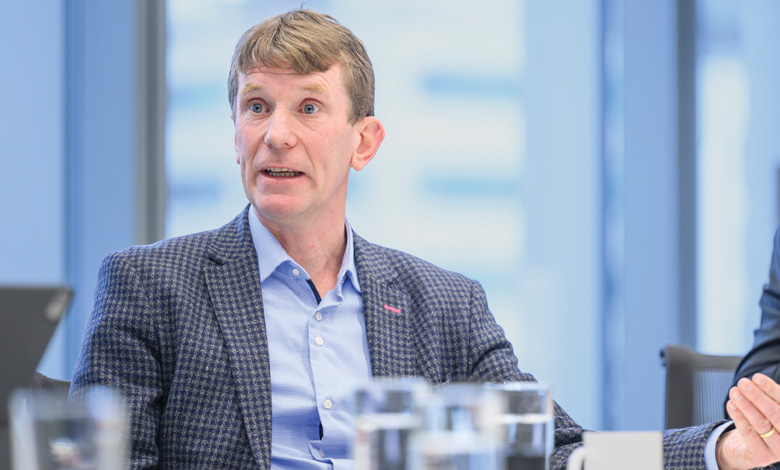
“Coordination must be paired with real collaboration and extend beyond 2026 into a sustainable medium and long term.”
Joe Duignan
Mitch Tunikowski
We should implement the four-pillar framework of the Accelerating Infrastructure Report and Action Plan transparently so people see how delivery will happen. Beyond the traditional business case, we need a stronger sense of shared purpose. Most people want infrastructure; delays driven by a small number end up costing everyone, including objectors. Public acceptance can therefore be an opportunity rather than a barrier. If the purpose and benefits are communicated clearly, and communities see consultation has been meaningful, planning timeframes can shrink. People often resist uncertainty more than projects themselves. Reframing proposals around outcomes and collective gain could help unlock progress more quickly.
What innovations have the greatest potential to shorten infrastructure delivery timelines over the next two to three years?
Joe Duignan
Firstly, it is important to optimise through innovation the utilisation of our existing assets and new infrastructure. This minimises the infrastructure needed and allows you to focus on delivering essential infrastructure. In relation to shortening infrastructure delivery timelines, one example in ESB Networks is innovation in the modularisation of substations to accelerate the delivery of EV charging points and upgrading substations, which is having a real positive impact. Collectively in addition to technical innovations, we also need to innovate in how we think and work. We need to look within and across our organisations to consider how we collaborate and work together.
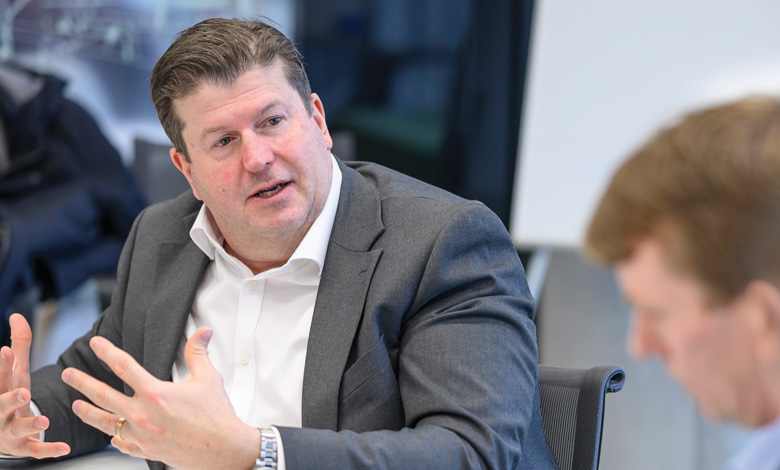
“If agencies align from the outset instead of acting in silos, we can present a stronger combined purpose and value proposition.”
Mitch Tunikowski
Shane Brennan
We identified numerous challenges in finding a route for part of the Powering Up Dublin project and after much research into international practices, we are adopting a three-metre diameter micro-tunnel which will run at depths well below any services and utilities along the route and cause less disruption to society. The Accelerating Infrastructure Report and Action Plan mentions a Critical Infrastructure Bill to enable the delivery of key strategic projects across the electricity, water, and transport sectors. This will enable public bodies and agencies to take a more progressive approach that considers how projects can be delivered, rather than why they should not be, and faster.
Mitch Tunikowski
We need to standardise infrastructure development. This would enable the supply chain to invest in building modular facilities to unlock modern methods of construction capabilities. A joined-up approach will minimise design and construction time. It will also reduce the objection cycle because society will be familiar with how projects are delivered.
Kevin Buckley
We do not do a massive amount of modular construction in Ireland. Around 90 per cent of small houses in Sweden are built in modular format. We are way off that rate of delivery in Ireland and we need huge investment to get there. There is also a skills gap and manufacturing facilities which will need to be delivered. They require capital grants and guarantees for their delivery to show investors this is the trajectory of construction. Another thing we do not see a lot of in Ireland is early contractor involvement. Regulated bodies in the UK use that to huge success. It shifts design risk to the left and enables early involvement of experts.
Angela Ryan
Standardisation will reduce projects’ lead-in and delivery time. For example, Uisce Éireann has over 1,200 wastewater treatment plants. Our wastewater discharge licences or authorisations for each of these sites is bespoke. This in turn means every treatment plant is bespoke. This adds an enormous amount of time and costs to individual projects, with licence applications taking up to two years. Increased standardisation, based on banding of outcomes, would allow Uisce Éireann to develop standard solutions which could be rolled out at scale. The benefits to the consenting agencies is that the solutions are understood, including performance, that allows for ease of authorisation and licencing. The sequential nature of projects approvals and consents is also a major delay. Improved regulatory simplification and coordination under the proposed Critical Infrastructure Bill will address this.
Nigel O’Neill
I think it is important to consider technical innovation in relation to people’s attitudes. We hope to begin Luas Finglas in the next year or so. Its track bed is modular and manufactured off site. It will have 40 per cent less embodied carbon compared to the Luas which was delivered 10 years ago. There is a culture of risk aversion when it comes to innovation. This is why regulators take so long on permitting and consenting. Additionally, the accountability culture of the civil services tends to centre around blame allocation. This focus should shift more on achieving results and outcomes.

“The volume scale and complexity of environmental regulation has increased exponentially over the past 20 years.”
Angela Ryan
How will analytics, AI, and digital tools change how Ireland plans, delivers, and manages critical infrastructure over the next decade?
Angela Ryan
Analytics provide greater scope to coordinate projects and can assist in portfolio management. There is a bottleneck at present with regard to major infrastructure projects out to tender at the same time. The proposed portfolio unit in the Infrastructure Division in DPER will assist with such issues in the future. Building information modelling (BIM) is the forefront of the efficient delivery of new projects and will also help with the whole lifecycle management of assets. Additionally, the recast Urban Waste Water Treatment Directive, will require water utilities to develop integrated drainage and wastewater plants for their wastewater networks. These plans will require live control of the networks. Digital twins for complex networks will be a cornerstone of this, allowing network operators to actively control weather events and rainfall ingress into the sewer network.
Mitch Tunikowski
Jacobs has become a solution provider for the water sector. We have developed technology called Aqua DNA which enables us to optimise existing networks, thus avoiding massive capital intervention. It features sensors deployed across the network which provide data on rivers. This informs our customers of regulations they are in danger of breaching so they can avoid this. Decision-making informed by AI-run scenarios will assist capital planning and operational capital deployment.
Nigel O’Neill
In TII’s ecosystem of national roads offices, local authorities, delivery partners, contractors, and so on, we experience a persistent resource shortage of about 20 per cent. There are unfilled vacancies because of challenges to recruitment. Systems can be improved by making datasets accessible and using agentic AI to perform the functions of roles that cannot be filled. Aside from that, there is a heavy governance burden in the public sector. This leads to up to 10 per cent more expended on overheads because you have to be super transparent as you are spending public money. AI could assists in addressing this.
Kevin Buckley
We need to make digital twinning a standard in Ireland, particularly for large infrastructure projects. It is a large investment but it will definitely pay dividends later on in the project. It will lead to better design, planning, and construction. The European Commission expects for the digital twinning market to be worth around €100 billion over the next three years. That is a sign it is working around the world. We need to buy into it and invest.

“Systems can be improved by making datasets accessible and using agentic AI to perform the functions of roles that cannot be filled.”
Nigel O’Neill
Shane Brennan
We all have our own unique geographic information system (GIS) data of our assets and systems. We need to share those with other utilities so we have all of the right information which enables us to make the correct decisions. Nigel mentioned the amount of reporting necessary in public bodies. We are looking at dashboards in smart innovative ways to integrate our reporting, risk management, and decision-making. PR6 is quite a large integrated transmission programme and we must find ways to implement it more efficiently and use data from the existing system to come up with the correct solutions.
Joe Duignan
Digital tools, analytics, and AI are already being used extensively in ESB Networks to plan, deliver and manage Ireland’s electricity infrastructure; their importance will continue to grow over the next decade. In recent years ESB Networks has significantly expanded the use of data-driven planning tools to support more efficient and effective network development. Digital tools can also be leveraged to empower customers too by providing high quality data, such as ESB Networks’ capacity heat maps, which support more informed planning and connection decisions. Using analytics, AI, and digital tools is central to optimised management and utilisation of infrastructure, and this can impact on how much new infrastructure will be needed in the future.
How can regulatory reform be balanced with environmental responsibility to enable faster infrastructure delivery?
Mitch Tunikowski
Any sort of reform should focus on process certainty, standardised templates, and front-end loaded environmental work. That cannot take place without having the right dataset for technology such as AI to help us with. Better data leads to a faster environmental assessment which in turn results in fewer queries, enabling faster infrastructure delivery. If things are standardised, everybody knows what to expect and everything in the environmental space at the moment is bespoke. Without us collaborating to develop a repository of information, people that object to projects will continue to have the ammunition to pull us apart.
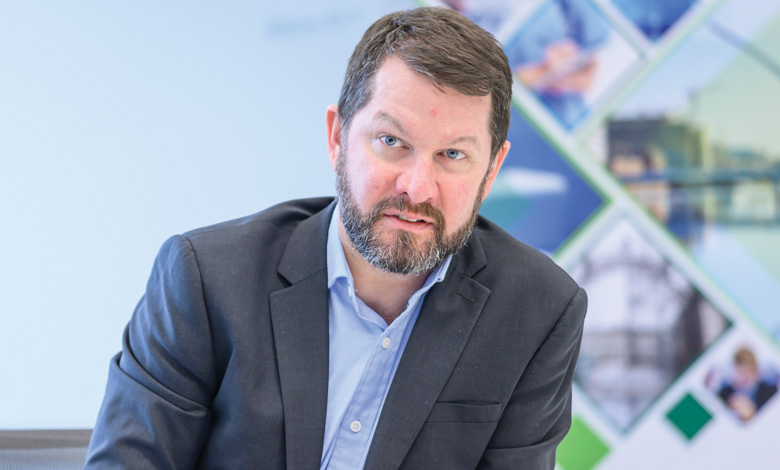
“We need to make digital twinning a standard in Ireland, particularly for large infrastructure projects.”
Kevin Buckley
Shane Brennan
One of the things we have looked at is nature-inclusive design proposals across our grid projects. We have been working with conservation bodies, partners, and our own in-house ecologist on nature restoration projects to attract wildlife and species to areas around substations through specific planting. As part of our community fund we also look to promote biodiversity and sustainability initiatives in communities. Regulators could perhaps look at allocating specific funding to incentivise environmental responsibility.
Angela Ryan
There is a lot of narrative in the public domain that regulatory reform and simplification will result in poorer environmental outcomes. That is not the case, in fact it is the opposite. Environmental regulation is extremely complex, involving multiple pieces of legislation, regulations, guidelines and agencies. The volume scale and complexity of environmental regulation has increased exponentially over the past 20 years, however, it is not driving improved environmental outcomes. This is demonstrated by the failures to meet targets under the Water Framework Directive, and continued biodiversity loss. In many cases valuable ecologists and environmental scientists spend significant amounts of processing or producing paperwork for project planning, instead of developing environmental solutions that will improve the environment. Similarly, many environmental judicial review cases are driven by complex procedures as opposed to environmental outcome. These issues subsume valuable resources and money that could otherwise have been spent improving the environment. The sole purpose of a wastewater treatment plant is to reduce pollution, delays to such projects actually impact the environment.
Nigel O’Neill
Public bodies take environmental protection and sustainability very seriously. Over-regulation is an issue but public bodies are not looking for deregulation. The environment has to be protected. There needs to be a systems approach; at the moment, environmental protection is approached in silos. We have exemptions in one set of regulations which are completely undercut by thresholds in another set of regulations. We have thresholds in Ireland that are less than 10 per cent of what a typical European member state would have. Where is the accountability around arriving at those thresholds? You have one piece of law in Ireland undercut by another. That needs to be addressed.
Kevin Buckley
The number of judicial reviews is still exploding. We are spending far more time on judicial reviews pertaining to infrastructure than the UK. There were significant increases in the number of judicial reviews in both 2024 and 2023. If we do not address those numbers, investors will start leaving the country. Energy in particular is dependent on foreign investment to keep things going. Genuine cases of environmental and community concern deserve their day in court, but anything designed to slow the process has to be minimised or eliminated.
Joe Duignan
Environmental responsibility is fundamental and reform does not change that. The infrastructure we are delivering is designed to benefit the environment, yet this is not communicated effectively enough. By enabling clean, renewable electricity for heating, transport, and wider society, we are supporting improvements in climate, environmental quality and public health. The objectives of the Climate Action Plan will not be achieved without the acceleration of infrastructure delivery. Reform is really about simplification and streamlining. We must still comply with the same directives, but we need to navigate a way to do this more efficiently.
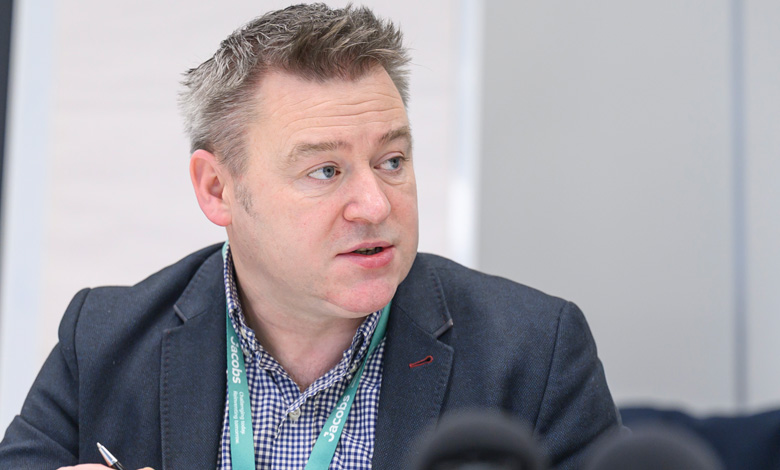
“We have embedded community forums wherever projects are developed, where we involve communities, volunteers and local politicians in decision-making from the earliest stage of delivery.”
Shane Brennan
What early co-ordination across sectors would help create a predictable pipeline of consented, delivery-ready projects in 2026, and what countries or industries should Ireland learn from?
Nigel O’Neill
A visible, reliable pipeline of projects is the single biggest lever. If the State defines what is needed and commits to it, the private sector will mobilise skills, competition, and capital to deliver efficiently, while citizens fund outcomes through taxes or charges. Certainty lets markets work. Transport-led development shows the multiplier effect as new lines unlock land, housing, and wider economic gains far beyond the asset itself. Provide continuity and industry will respond. Without it, capability drifts away. Government must therefore prioritise clear sequencing and long-term commitment so delivery becomes routine rather than episodic.
Mitch Tunikowski
I strongly agree on the need for a dependable pipeline and for keeping talent on the island. When investment stalls, experienced people leave and are hard to replace. Early, intentional coordination across sectors can multiply benefits: major transport or utility projects can unlock land and development, and those who gain should contribute to enabling infrastructure. If agencies align from the outset instead of acting in silos, we can present a stronger combined purpose and value proposition. That clarity would build support, reduce conflict, and improve capital efficiency while sustaining a virtuous cycle of skills and delivery capacity.
Joe Duignan
Coordination must be paired with real collaboration and extend beyond 2026 into a sustainable medium and long term. Structures like the Joint Utilities and Transport Clearing House (JUTCH) approach show how breaking silos can create tangible progress. A whole-system view which bring together electricity, water, transport, and local authorities helps everyone understand constraints and opportunities. Recent examples demonstrate that when organisations sit together and solve problems collectively, timelines can shrink dramatically. We now need to scale that behaviour nationally so integrated planning becomes normal practice rather than the exception. Another example of coordination across sectors is the way secondees worked together supporting the development of the Government’s Accelerating Infrastructure Report and Action Plan which proved the value of shared understanding.
Angela Ryan
Predictability starts with credible commitment. The Accelerating Infrastructure Report and Action Plan must be more than a list. It needs visible backing, clarity, and follow-through. Cultural change is also essential. The actions involve multiple sectors and agencies, departments, regulators and utilities, and faster delivery requires change across all of these. The action plan will only succeed if everyone involved tasks themselves on improvement, not on focus on excuses to maintain the status quo. Internationally, highly integrated master planning offers lessons. Long-term sequencing across transport and utilities can drive remarkable outcomes. While Ireland is different, applying similar integration, especially in major urban areas, could significantly enhance delivery.
Kevin Buckley
We need a transparent, published pipeline across sectors. Other countries provide markets with clear forward visibility, giving contractors confidence to invest and stay. Without that certainty, firms and skills migrate elsewhere. Poor sequencing also creates spikes, where several mega-projects land together and overwhelm capacity. A national pipeline that signals priorities and timing would smooth demand, support competition, and stabilise pricing. It would also help rebuild delivery capability domestically. Predictability, not sporadic announcements, is what convinces industry to commit people and resources for the long haul.
Shane Brennan
Forum-based coordination has worked well in Dublin, bringing utilities, authorities, and stakeholders together to align programmes and identify conflicts early. The challenge is extending that model nationwide, because delivery ultimately happens locally. National planning statements could provide a common foundation, with similar collaborative structures built region by region. Alongside this, several task forces are already helping unblock priority areas, and proposed legislation may further streamline matters. Internationally, shared or parallel infrastructure corridors offer useful inspiration. Even where full integration is difficult, we should at least future-proof works by adding capacity or ducting while the ground is open.