Working with schools and families to improve access for autistic learners: D15 ACAT
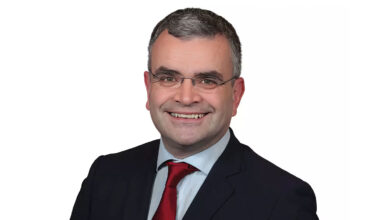
According to NCSE CEO John Kearney, “the National Council for Special Education (NCSE) envisions a world-class, inclusive education system where children and adults with special educational needs are supported to achieve their potential and participate fully in society”.
“The NCSE’s mission focuses on promoting a continuum of inclusive education through research, policy advice, and supporting schools and families.” This vision in closely aligned with The Roadmap for Social Inclusion 2020-2025.
Achieving this vision includes the NCSE’s ongoing work with the Department of Education and Youth, (DEY), schools, patrons and families when expanding special classes for autistic learners requiring such provision. Through sustained advocacy by school principals, working in formal partnership with parents and the NCSE, autism class provision in the area in 2025 expanded to 47 autism classes across Dublin 15 schools, with plans to further develop this provision for the 2026/27 academic year, increasing fully inclusive participation of autistic learners in mainstream and special schools with their peers.
The trial
Despite support from the NCSE network of Special Educational Needs Organisers, (SENO), families have continued to express experiencing significant challenges navigating the autism class admissions process:
- making applications to multiple schools;
- tracking multiple admission windows; and
- repeatedly submitting extensive documentation.
These systemic barriers prompted the Dublin 15 Primary Principals’ Network, in partnership with the NCSE, to design a more transparent and equitable approach: D15 Autism Class Application Trial (D15ACAT).
D15ACAT was established as a school-led initiative, developed in close partnership with the NCSE, with the following aims:
- to preserve each school’s independent admission policy and criteria;
- to introduce a single application window across all schools and a common application form;
- to reduce the administrative burden on families and schools;
- to improve clarity and consistency of communication;
- to provide structured and accessible parent supports; and
- to enable the NCSE to improve forward planning based on accurate, localised data on specialist provision requirements.
Extensive consultation underpinned the model, including engagement with school patrons, the Irish Primary Principals’ Network, the Irish National Teachers’ Organisation, the National Association of Boards of Management in Special Education, the National Parents Council, local parent groups, education welfare officers and HSE children’s disability network teams. The DEY’s governance and special education sections were also consulted.
As the statutory body responsible for sanctioning and reviewing autism classes, the NCSE was uniquely positioned to take on the role of data controller, formally embedding partnership at the core of D15ACAT.
In 2024/25, 13 schools participated in the initial trial, offering 24 autism class places. A joint communications strategy ensured wide awareness, including information on school websites, early years services, disability teams, local and national media, and a dedicated D15ACAT page on the NCSE website.
In the first year, 105 applications were received.
The initial trial demonstrated clear benefits for families, including submitting one application rather than multiple forms. Schools retained full autonomy in applying their own admissions criteria and managing offers and waiting lists. However, several areas for improvement were identified by principals, parents and the NCSE.
Year two
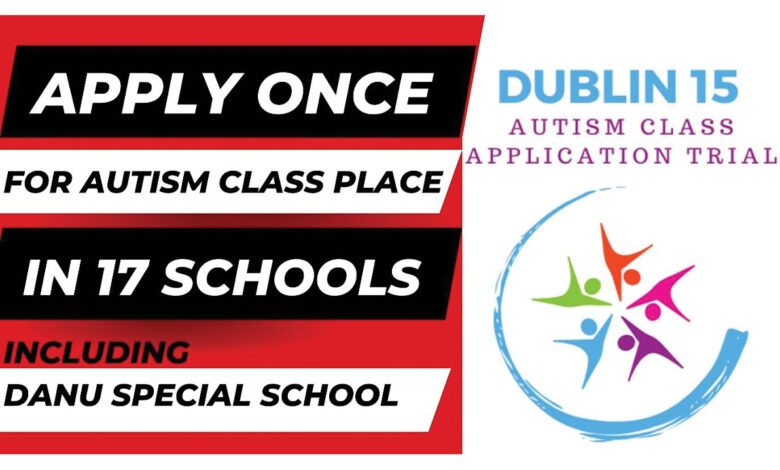
For the 2026/27 admissions cycle, D15ACAT expanded to 17 participating schools. Sixteen places were available through the ACAT process, with 38 places available across the wider network.
A key development was the introduction of an online application platform. This significantly simplified the process for parents and enabled:
- automated acknowledgements and follow-up communications;
- structured, scaffolded support for parents who required assistance; and
- clearer tracking of application status.
This also substantially reduced the administrative burden on schools. Principals reported ease in applying admissions criteria consistently and efficiently. Notably, there was a 0 per cent error rate in applications received by schools, reducing time-consuming administrative workload significantly.
Parent engagement was strengthened further through a layered support model. Prior to the opening of one unified application window across all participating schools, principals and NCSE staff jointly delivered morning, evening and online parent information sessions.
During the trial NCSE, SENOs provided in-person support sessions one day per week in nominated schools. Sessions ran across mornings, afternoons and evenings, included provision during the mid-term break, and rotated across different days to maximise accessibility for parents.
A coordinated communications campaign also supported access. Posters, short explainer videos and digital content were shared across school websites, social media platforms and NCSE channels. Clear, step-by-step guidance was provided on how to access D15ACAT, to improve parental understanding of the process.
The 2026 cycle received 139 applications:
- 101 applicants (72.7 per cent) were eligible for autism class placement
- 28 applicants (20.1 per cent) were eligible for special school placement
- Only one application (0.72 per cent) indicating strong alignment between clinical assessments, school referrals and parental applications.
- Nine applications were incomplete.
As D15ACAT enters its next phase, the partnership between schools and the NCSE continues to evolve. Priorities include refining digital systems, strengthening early communication around eligibility deadlines in alignment with the relevant Department of Education and Youth circular and similar trials, and exploring options within legislative constraints to address identified issues.
The D15ACAT demonstrates the impact of collaborative, system-level leadership, combining school-based expertise with statutory partnership.
Kearney says: “When schools and agencies work together, meaningful and sustainable system improvement which promotes and supports fully inclusive education practices becomes achievable. This is key to our work with schools and families.”
Andrew Torrance, Principal Officer, NCSE
E: andrew.torrance@ncse.ie
T: + 353 1 603 3433
Helena Trench, Principal Powerstown ETNS
E: principal@powerstownet.com