
Larry Donnelly: ‘Challenges abound for the transatlantic relationship’

Political commentator and law lecturer Larry Donnelly examines the state of relations between the United States and Europe, and whether President Donald Trump is a reliable partner for Europe.
“Mr Secretary, I’m not sure you heard the sigh of relief through this hall when we were just listening to what I would interpret as a message of reassurance, of partnership,” said the chairman of the Munich Security Conference, Wolfgang Ischinger, in reaction to United States Secretary of State Marco Rubio’s recent address to the gathering of key global players. European Commission President Ursula von der Leyen added that she was “very much reassured”.
But was theirs an overly kind assessment of Rubio’s remarks, a collective ‘phew’ that his delivery was not as caustic as Vice President JD Vance’s was in 2025 or another attempt to genuflect and hence curry favour with President Donald Trump’s loyal deputies? In all probability, it was a mixture of the three.
For notwithstanding Rubio’s more genteel tone, the content was fairly indistinguishable from his colleague’s. While using some flowery, evocative language to pay homage to the longstanding ties between Europe and the US, there was no shortage of chastisement and not so thinly veiled criticism on an array of fronts: inadequate military spending, “open borders” immigration laws, a war on free speech, the perils of the welfare state, subservience to flawed international institutions, appeasement of the “climate cult”, and more.
In sum, in Rubio’s words, America and Europe may have “saved and changed the world” and the US again wants to chart “the path for a new century of prosperity” jointly, but if Europe does not get its act together, Uncle Sam will go it alone.
Such rhetoric presents ample cause for concern. First, as has been posited subsequently, Rubio’s admonitions are based on a blend of half-truths and outright falsehoods about the cited policy failings. Second, acceding to any of these preconditions with a view to “renewing the alliance” would, without being excessively glib, arguably constitute an abandonment of what it means to be European.
Third, there is a sizeable, receptive audience for these sentiments, if not for the negativity they emanate from, within the US. Its membership is not confined to the MAGA movement.
Although the data indicates that a majority of Americans broadly approve of the European Union, approximately half agree that EU countries need to increase their defence spending and a smaller fraction consider it a major economic power in 2026. Affection for Europe is prevalent, as many have a particular grá for the land “their people” left behind for a new life, yet so is a sense that, owing both to their ideological and non-political beliefs, the continent’s future will not match its storied past.
Simultaneously, and not surprisingly in the wake of President Trump’s now stalled campaign to take Greenland, European opinions of the US have sunk to their lowest ebb since pollsters began tracking them. Indeed, the only priority outlined by Secretary of State Rubio for which there is popular support is a reduction in immigration. Against this backdrop, what might a redefined transatlantic relationship look like and how can Ireland best position itself?
Those in Europe, who lament the rapid change and total unpredictability that have been the hallmarks of this administration and comfort themselves by pointing to the fact that Donald Trump will no longer be president in 2029, have a point, to an extent. But once the metaphorical genie is out of the bottle, it is difficult to get it back in. The thrust of ‘Trumpism’, without the volatile personality and the unexpected, foolhardy interventionism during the last 12 months, is that the US should mind its own business and let other nations do the same. Polling shows isolationist thinking is at its highest level in decades.
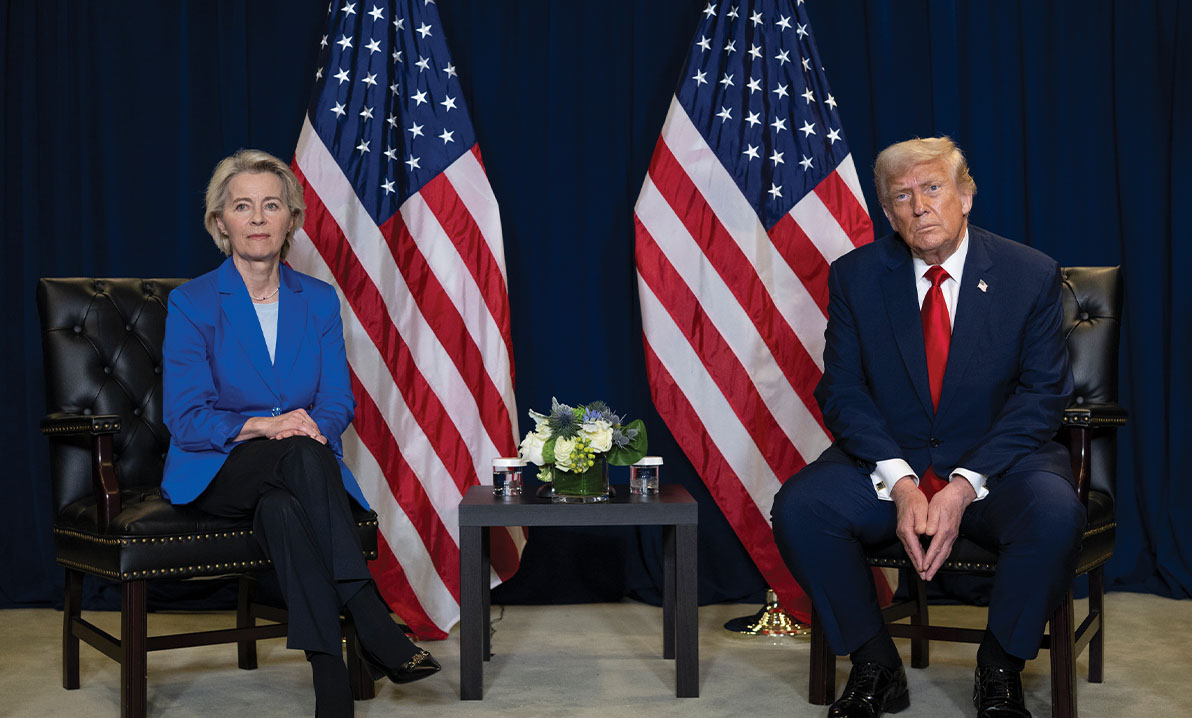
Consequently, whether a Democrat or a Republican is in the White House, Europe can no longer be as confident that America will be firmly in its corner, either economically or militarily. The EU is absolutely correct to invest in defence and, while pushing to ensure that vital trade with the US continues, to explore new markets.
On the bright side, post-Trump presidents and congressional leaders can hopefully be convinced that close cooperation is necessary to vitiate the myriad threats posed by a burgeoning kinship between China and Russia. As one commentator wryly declared, perhaps President Trump has done Europe a favour in forcing it to stand on its own two feet and assert itself.
As for Ireland, it is important to note that this country has always been served well, and continues to be served well, by its diplomatic team in the US. They have nurtured and strengthened our widely envied, mutually beneficial friendship. Increasingly, however, political engagement is also crucial as our interests and stances on lots of big issues diverge. This is an undeniably rocky and potentially pivotal moment.
Bringing the next generation on board by creating caucuses of state legislators with an affinity for Ireland was a great idea which should pay dividends. Appointing a credible, experienced Irish political figure to be a new envoy to the US Congress, taking the temperature and advocating for this island’s interests on Capitol Hill, would be wise, too. Politicians instinctively ‘get’ other politicians. And the Irish on the ground must cultivate Republicans, as well as Democrats.
These suggestions are merely scratching the surface of how to deal with an incredibly complex situation, the de facto reconfiguration of the world order, for Europe generally and Ireland specifically.
To resort to an awful expression, we are where we are. We have to act accordingly.
Larry Donnelly is a Boston-born and educated attorney, a law lecturer at the University of Galway, and a regular media contributor on politics, current affairs, and law in Ireland and the US.