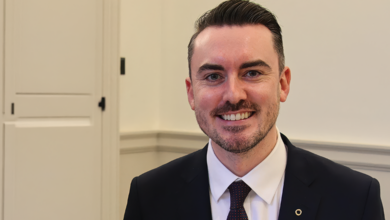
Senator Patricia Stephenson: Where is the Occupied Territories Bill?

The Occupied Territories Bill (OTB) was first introduced by Senator Frances Black in 2018 and was passed by both the Seanad and Dáil before the 2020 general election. Since then, we have seen the genocide in Gaza livestreamed on our phones, writes Senator Patricia Stephenson.
We have also seen the forced displacement of tens of thousands of Palestinians from the West Bank and the theft of their land by the Israeli colonist settler regime.
Since then, the International Court of Justice (ICJ) released a historic advisory opinion that found all states must abstain from entering into economic or trade dealings and prevent trade or investment relations with Israel regarding the illegal settlements. It is hard to believe that, eight years on from the Bill’s initial introduction, we are still having to debate its efficacy and legal status.
Passing the OTB was a central promise made by Fianna Fáil and Fine Gael during their election campaigns; it is not merely an opposition pursuit. The legality of the OTB was unanimously agreed at the Foreign Affairs Committee on a cross-party basis during summer 2025’s pre-legislative scrutiny. This makes the Government’s prevarication and total disregard for the Committee’s findings even more frustrating.
The coalition references the long-awaited advice from the Attorney General as a convenient excuse when pressed by the media on when they intend to introduce the Bill. In summer 2025, Tánaiste Simon Harris TD said the Government has “no policy objection” to the Bill, a version including services, pending the Attorney General’s advice. However, he also said the advice was due in “early in the autumn, early in the next Dáil term”, and yet here we are, waiting.
It is also worth noting that in 2024, advice from the Attorney General was leaked indicating a clear legal pathway for banning both goods and services in the Bill, so it is unclear to me what has changed; the Government has never clarified this.
We often hear from the Government of the importance of international law and human rights; it is a sentiment I strongly agree with. However, rhetoric is not sufficient when it comes to international law, because international law is only effective when it is implemented. It is only impactful when countries like Ireland uphold it through their own actions.
The passing of the Occupied Territories Bill would represent the Government meeting their obligations under international law, as per the ruling by the ICJ, so the equivocation and slow walking we have seen from government offices represents not only a moral deficit but a complete failure to meet the bare minimum international legal requirements.
Ireland cannot dine forever on the actions of our past. If this government continues to fail to meet their legal obligations to ban trade with the illegal occupied settlements in Palestine, we will lose our international credibility.
Ireland has long held a unique geopolitical position: our neutrality and respect of international law allowed Frank Aiken, former Minister of Foreign Affairs, to take the lead on introducing the neutral non-proliferation treaty at the UN in the 1960s, brokering a degree of peace and opening dialogue with the US and USSR. This was only possible because Ireland was seen as a country which valued and, critically, upheld international law.
Fundamentally, the OTB is a crucial piece of legislation because it is imperative for us as a country that upholds international law to take action in the face of genocide. Far too many countries across the world are turning a blind eye to ethnic cleansing and attempts to eradicate Palestine from the map.
It is no wonder that the FAI General Assembly’s vote to ban Israel from international competitions was overruled by the FAI President. If our government does not lead by example by passing the OTB, how can we expect other organisations to demonstrate moral courage?
We often talk about the risks associated with Ireland passing the OTB, but Irish human rights lawyer Blinne Ní Ghrálaigh put it well during her testimony to the Foreign Affairs Committee that the risk is significant if we fail to take action: “It is not the legislation itself that would give rise to a challenge; it would be any continuing failure by Ireland to comply with its obligations that could give rise to a legal challenge. It is the fact of non-compliance that would be a breach of Ireland’s international obligations.”