Regulating the digital world

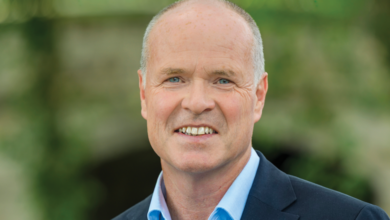
Garrett Blaney, Chairperson of the Commission for Communications Regulation (ComReg) reflects on the challenges of change.
ComReg is Ireland’s communications regulator. ComReg has been in existence since 2002 and in the intervening period we witnessed a vast amount of change in the electronic communications sector. The market has gone from a small number of companies providing electronic communications to a sector where investment and choice is provided by a wide range of fixed and mobile companies.
ComReg seeks to empower consumers by ensuring the availability of independent information, advice, and online resources, while also offering an effective complaint handling process
Regulatory clarity since 2002, based on ComReg and EU rules, has created a level playing field for the market and provided adequate radio spectrum and numbering resources to enable multi-platform competition. There has been major investment in the market by the private sector and through government intervention. The telecoms market continues to be very dynamic with further regulatory change expected with new European legislation expected in 2026.
The postal services market has recently evolved from where letters were the predominant product, to a market today where parcels and packages are now a critical part of the market.
ComReg has been asked by government to take on a range of new functions in addition to our existing roles. These are significant roles that will mean the largest change to our organisation since we were founded in 2002. The new responsibilities are in areas such as the second Network and Information Systems (NIS2) Directive, the Critical Entities Resilience (CER) Directive, the European Accessibility Act, the Data Act, and the Artificial Intelligence (Al) Act.
These new responsibilities include new sectors such as digital infrastructure, cloud providers, digital providers of ICT service management and space. We will need to further develop expertise in these new areas to address this expanding remit, particularly in the digital infrastructure sector. ComReg has been actively preparing for these new functions.
Even as our responsibilities grow, we remain focused on our commitment to promoting competition, resilience and protecting the interests of end-users.
The challenges facing the digital sector that could be summed up in four Rs: reliance, resilience, robust, and radical.
Reliance
Covid was a step change in the level of digitalisation adoption in Ireland, which is now above average for EU member states. ComReg took urgent action during Covid to underpin the resultant increase in network traffic, and while society has returned to normal after the pandemic, the network traffic continues to grow. The consequence of pervasive digitalisation has been a significant increase in Ireland’s reliance on connectivity and the digital infrastructure to ensure that end-to-end digital services can be delivered to customers.
Resilience
A number of recent incidents indicates that the resilience of Ireland’s fixed and mobile networks, and broader international digital infrastructure is not as resilient as we would like.
Storm Éowyn was a portent of the likely types of storms we may face in the future as climate adaptation becomes increasingly important. ComReg and the Department of Culture, Communications and Sport have worked with industry to identify key lessons from this major storm in order to enhance resilience of the networks in anticipation of future storms.
Recent outages in late 2025 of global cloud providers show that while cloud systems are designed to be very reliable, they are still subject to interruptions, which can have disruptive implications for a wide range of digital service users.
ComReg’s regulatory supervision responsibilities under the second Network and Information Systems (NIS2) Directive which takes an all-hazards approach to cyber security and resilience will focus on reducing cyber risk and increasing resilience, working closely with the National Cyber Security Centre and relevant government departments.
Robust
Digital services, and the underpinning connectivity and digital infrastructure, must be protected against bad actors, whether motivated by ill-gotten commercial gain or nation state threat actors operating in a more febrile geopolitical landscape.
Ireland has an enviable position currently in the global ecosystem of digital infrastructure that underpins Europe but this brings increased risk that we could be a target for attack. The forthcoming legislation will also be key to ComReg, working with others, to ensure that we reduce the cyber risk to our critical infrastructure.
Radical
We will always seek to provide regulatory stability and predictability to support long-term investment and plans for the market. What is meant by radical is the radical change in technological development that we have experienced in recent years which is continuing at pace.
An example of this radical change is the rise in generative Al. We know that major change is happening but it is very difficult to predict what impacts it will have in the future. The new technology is providing fantastic new opportunities for customers and society but unfortunately each new technology also introduces a range of new problems as well as solutions. Our job as regulators is to maximise the benefit for users while minimising any downsides.
We are working closely with other Irish digital regulators in a grouping called the Digital Regulators Group (including Coimisiún Na Meán, Competition and Consumer Protection Commission, and Data Protection Commission) to work collaboratively with each other and government to secure Ireland’s position as a centre of excellence internationally in best practice regulation of new digital technologies.