ESB’s Marguerite Sayers: Accelerating the clean energy transition
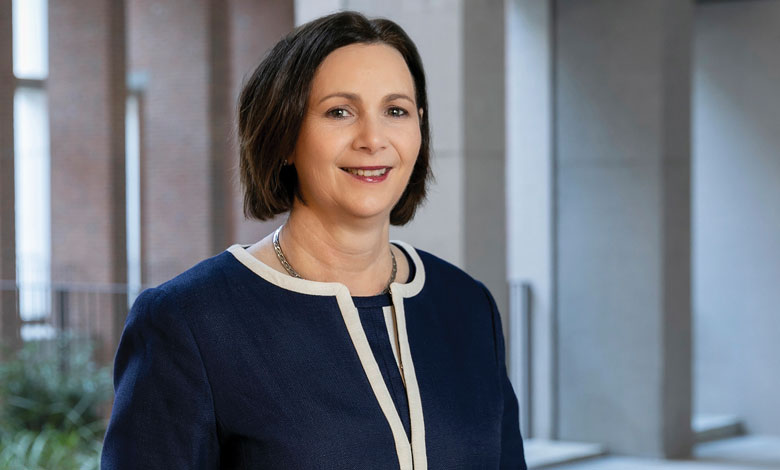
ESB Deputy Chief Executive Marguerite Sayers talks to eolas Magazine about ESB’s priorities and highlights progress against the background of a major acceleration in renewable energy generation, grid infrastructure buildout, and public investment in the energy transition.
How would you describe ESB’s strategic vision for Ireland’s future energy system as we work toward net zero by 2050?
First and foremost, our vision is for clean, home-grown electricity to be at the heart of Ireland’s future energy system. This is built on two core pillars: one, decarbonise the electricity we generate by building and connecting renewables at scale; and two, roll out electrification across sectors like transport, heating and industry as far as is technically possible.
This model is not unique to Ireland and is being adopted right around the world as countries race not only to cut their carbon emissions but to grow their energy security, particularly after the geopolitical events of the past number of years. In addition to climate benefits, the more we can use our own natural resources and make homegrown renewable electricity our primary energy source, the more we increase our energy independence and end our reliance on imported fossil fuels, over which we do not have any cost control.
ESB will be launching a publication in early 2026 that will set out this vision for Ireland’s future energy system, underpinned by modelling carried out by the MaREI energy research centre at UCC. The research shows that over 70 per cent of our final energy needs in Ireland can be met by electricity in 2050, up from less than 25 per cent currently. Most primary energy needs can be met by indigenous renewables, complemented by interconnection and energy storage, with the remainder of energy demand met by zero carbon fuels like green hydrogen or biofuels. The study also shows how the vast majority of energy needs in transport, heating and industrial applications can be met in future by clean electricity. Take industry, which has long been considered the hardest sector to electrify. By deploying heat pumps and electric boilers, it is now possible to use electricity for applications up to 400 degrees Celsius, which creates clean energy opportunities that were not there in the past.
For this vision to materialise, it will not be enough for ESB and the electricity sector to take action alone. We will need to encourage customers and communities to embrace an all-electric lifestyle. It would be ideal to be in a situation where it was an easy decision to opt for an EV over a petrol car, or choose a heat pump when your gas boiler needs replacing, but between misinformation, cost issues, and some perceived inconvenience issues, we are not there yet. Changing the decision tree in favour of clean energy will require continued investment in infrastructure, for EV charging, for example, and additional supports to ensure the adoption of low-carbon technologies.
Through engaging with our customers, and our own personal experience, it is clear that once people do get engaged in their own energy transition – if they buy an EV, or install solar panels or a home battery – they become so clued in to when renewable energy is available, when the best rates are available to charge their car or run their appliances, when to import and when to use their batteries, they naturally get more and more interested in learning what next step they might take.
“Democratisation of energy will be so important, as our future system will rely on consumers taking greater control over their energy use and using electricity in a more flexible way.”
This democratisation of energy will be so important, as our future system will rely on consumers taking greater control over their energy use and using electricity in a more flexible way, so we can match demand to available renewable electricity as much as possible, maximising its use and bringing down costs for consumers.
What progress has ESB made in building a renewable-led electricity system, and what are the key priorities for scaling generation, storage, and zero-carbon dispatchable solutions?
It is over three years now since we launched our strategy Driven to Make a Difference: Net Zero by 2040, which set out our commitment to decarbonise our operations by 2040. This has significance beyond ESB, as a net zero electricity system by 2040 is essential for Ireland to reach its legally binding 2050 climate goals.
Taking stock of our progress so far, the carbon intensity of the electricity we generate in ESB has fallen by almost one-fifth since 2021. Going back further, total carbon dioxide output from our electricity generation has fallen by 65 per cent since 2005, despite all of the challenges. Our renewables and storage portfolio has also increased by almost 40 per cent in the past three years from 1.3GW in 2021 to 1.8GW today and we have a very significant pipeline of future projects.
In addition, all renewable projects, including those not owned by ESB, have to be connected to the network, which requires the construction of a lot of additional high and medium voltage lines and stations. The volume of zero-carbon generation connected by ESB Networks has grown by over one-third in recent years to reach over 6.3GW, which is equivalent to Ireland’s peak electricity demand. Not many countries can say their installed renewables capacity matches their peak demand, unless they have very significant natural hydro resources.
Of course the challenge is that not all renewable sites can generate all the time, as they are very reliant on weather and, in the case of solar, the time of the day. One solution to help increase the volume of available renewable electricity is energy storage, and ESB’s portfolio of battery energy storage systems (BESS) is now one of the largest in Europe at 300MW.
We also have a very significant pipeline of renewable energy projects totalling more than 10GW, and there is great excitement in the company since ESB’s JV with Ørsted won the most recent Irish offshore auction. We now have some really valuable experience in this space, as our first offshore wind farm, Neart na Gaoithe, located off the coast of Fife in Scotland and co-owned with EDF Energy, became fully operational last summer with a capacity of 450MW. Construction is underway on a second larger offshore joint venture (with Red Rock), Inch Cape, which is also in Scotland. While the timelines for offshore development here in Ireland are now longer than originally expected, the experience and skills ESB is gaining through projects in Great Britain will be invaluable in delivering in Ireland.
This will be the real game-changer, unlocking the potential of the incredible natural wind resources right off our shores.
Solar is an area that has seen astounding growth in Ireland over the past five years, and it is a technology that we are really focusing on, with planned investments of around €1 billion over the coming years. ESB’s first wholly-owned solar farm in Bullstown, County Meath, began generating during the summer, along with a new site at Timahoe, County Kildare, part of our solar co-development agreement with Bord na Móna.
How is ESB approaching the need for greater system resilience and security of supply as renewable penetration increases?
Resilience and security of supply are absolutely crucial priorities as the energy transition progresses. As people become more and more dependent on electricity to power their lives, the electricity system must be highly reliable and robust, especially as we ask households and industries to electrify more and more. This can be particularly challenging given increased incidents of extreme weather events.
For ESB, this means focusing on two things. First, investing in the electricity transmission and distribution networks on a scale that is far beyond what has gone before. The upcoming Price Review 6 (PR6) period will be crucial for ESB Networks to provide adequate future grid capacity and replace some ageing assets, with an investment of upward of €13.6 billion planned over five years. This will deliver on two fronts: it will enable decarbonisation, building out the network needed to integrate renewables and low-carbon technologies like EVs and e-heat; and crucially, it will enable new connections for our growing population and economy.
Second, we need to ensure a secure, stable generation supply in a renewables-dominated system. On the one hand, this is about having the backup generation in place to keep the power flowing when the wind is not blowing and the sun not shining. Our modelling has shown that green hydrogen – which could be produced from excess renewable energy and stored in subsea caverns – would be the optimal solution to deliver this security with zero carbon emissions. Other options include bioenergy, large-scale longer-term battery storage – an area where there is lots of innovation happening at present – or dispatchable gas with carbon capture and storage technology.
On the other hand, new technologies and system services are needed to keep the system stable as more variable renewables are added to the grid. One challenge is maintaining inertia in the grid, which acts as a buffer against momentary dips in supply. In a fossil-based system, this is provided by massive spinning generators which are not present in wind or solar power, so we need something else to provide that stability. This was why ESB installed a €50 million synchronous compensator at our Moneypoint station a few years back. It does not generate any electricity, but it provides that mechanical inertia for system stability. These are well-tested solutions that can be rolled out more widely as we add more renewables.
With electricity demand rising, how is ESB balancing the energy trilemma of security, affordability, and sustainability for customers and the wider economy?
While sustainability and the drive to decarbonise are at the heart of our strategy, the energy we deliver must be reliable and affordable.
In our vision for Ireland’s future energy system, achieving these three aims will not involve the same trade-offs as today. A highly electrified system where renewables deliver most of the power can deliver on all three: low- or no-carbon generation; a new kind of energy security, as we are no longer relying on imported fossil fuels, and with that will also come stable, predictable pricing.
But we are not there yet, and from where we stand today, affordability remains a really central challenge. Our energy supply business, Electric Ireland, is acutely aware of the pressures facing customers, and announced last autumn that it would cut its gas prices and that residential electricity prices will be kept unchanged for its almost 1.1 million residential customers from November. This is positive news for those customers through the winter period. However, it is probably not well understood that well over 90 per cent of the costs that make up electricity bills are not controlled by suppliers, and so there is not a huge amount of wriggle room.
At a more macro level, we have been working with other stakeholders to explore the key drivers of electricity prices in Ireland, how we compare to other European countries and what strategies might help. One thing that is clear from the analysis is the outsized role played by the wholesale price of gas, which has shot up since the invasion of Ukraine in 2022. Compared to other countries, Ireland is particularly reliant on gas for our electricity generation as we have limited hydro resources, do not have nuclear power and no longer have coal or peat, so as more renewables come onstream, we can hopefully reduce that gas reliance which will put downward pressure on prices in the medium term.
What role will innovation play in Ireland’s energy transition, and which technologies or initiatives do you believe will be most transformative in the coming decade?
One aspect of my role at ESB is heading up the innovation and transformation section of our business, so it is a topic close to my heart. It might not be the first thing people associate with a long-established company like ESB, but I am proud to say we have a really strong reputation for innovation in the energy sector internationally and that has been recognised by external agencies.
Undoubtedly, many of the advances we are seeing in energy are being driven by digital and data, with new hardware solutions being used to gather the data. One pilot we successfully trialled recently was using drones to survey sections of the electricity network, capturing the information digitally and using AI to identify areas that might be susceptible to significant storm damage.
“There is also a growing realisation of the importance and necessity of investing in the electricity network, which will be a real workhorse for the energy transition in every sector.”
Other innovations will support the move to a renewables-led system: for example, we are involved in a project to develop underwater chambers that make it possible to repair subsea cables, the kind needed for interconnectors or offshore wind farms, on the seabed, instead of needing to bring them up to the surface, which can be a lengthy process as it requires the availability of specialist ships.
One way we keep informed on the latest tech developments is through our involvement with Free Electrons, a startup innovation hub that was founded by seven international utilities (including ESB) almost a decade ago. It links established utilities, who have experience and capital, with startups who bring fresh ideas and new ways of approaching the challenges facing the sector. ESB hosted the Grand Finale of the Free Electrons competition in Dublin in October. Currently, there are 48 live projects that had their genesis in Free Electrons, and they are expected to deliver value of somewhere around €30 million.
What message would you share with policymakers, industry partners, and communities about the importance of accelerating delivery now?
We are starting from a good place, in that there is a strong understanding and support in Ireland of the need for decarbonisation. There is also a growing realisation of the importance and necessity of investing in the electricity network, which will be a real workhorse for the energy transition in every sector. This is something we have seen reflected in the decision by the Government, ESB’s majority shareholder, to make an equity investment of €1.5 billion in support of ESB Networks planned capital expenditure under PR6. For renewable generation, too, there is broad consensus that we need to build more, faster. The recent changes to planning legislation should have a positive impact on the pace at which we can roll out critical infrastructure.
What will be crucial to accelerate the momentum we have built over the past number of years is gaining buy-in from customers and communities. We know there is overwhelming support for the clean energy transition in a general sense, but many are hesitant when it comes to accepting new infrastructure or making specific changes to their lifestyles, particularly when it comes with additional costs and needing to make fast decisions, on the replacement for a gas boiler, for example. Making these choices easier and more affordable for people is something we need to work on together across government and industry.
We will all have to make some accommodations to make the transition a success and to position Ireland as having a stable and reliable electricity system. If we can achieve that, it will be a game-changer for the country. Not only will we deliver our climate targets, but we will increase our energy independence – providing secure, home-grown power to underpin our economy and deliver sustainable growth in Ireland for generations to come.
|
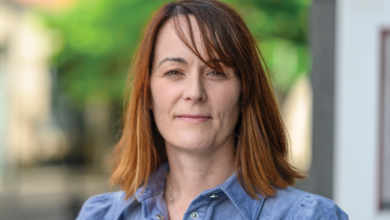
About: Marguerite Sayers Marguerite Sayers was appointed ESB Deputy Chief Executive in July 2022. Immediately prior to this, Sayers held the role of Executive Director, Customer Solutions at ESB from 2018. She has worked in various technical and managerial positions in ESB for over 30 years, including generation manager, head of asset management for ESB Networks and managing director of ESB Networks DAC. She holds a degree in electrical engineering from University College Cork (UCC), is a chartered engineer, a fellow and past president of Engineers Ireland, a fellow of the Academy of Engineers, a chartered director, a member of the Board of Energy UK, and a Trustee of The Irish Times. |