Beyond English. Beyond compliance
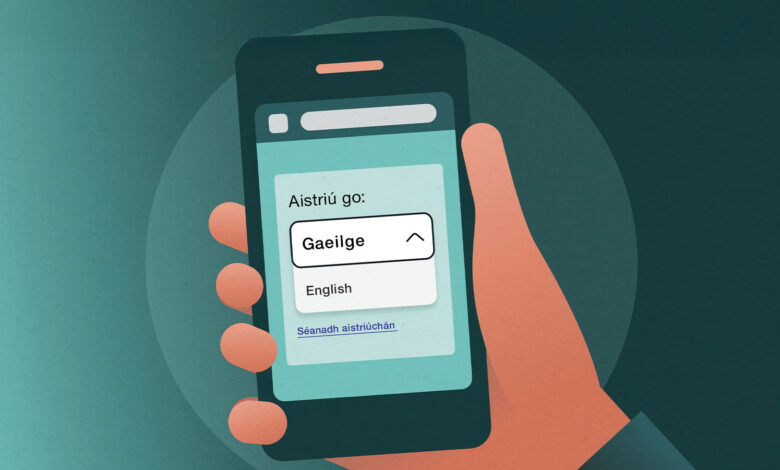
Irish language translation is not just a strategic imperative; it is at the heart of Ireland’s digital public service and it is being built into the tech used to make Ireland’s top public sector websites, writes Stella Power, Managing Director of Annertech.
In Ireland, the imperative for digital services to be fundamentally multilingual is driven by heritage and law.
The Official Languages Act mandates high standards for Irish translation across all digital touchpoints, recognising the language as a vital part of the nation’s cultural fabric.
For the public sector, this is more than just compliance; it is about social equity, heritage and pride. It is also about ensuring every citizen, especially those in the Gaeltacht, can access essential services and democratic processes online, in their preferred language.
The challenge lies in guaranteeing accuracy and accessibility. The multilingual feature of LocalGov Drupal offers the proven, strategic foundation required to transform this legal duty into a successful, inclusive and cost-efficient digital reality.
How does this multilingual feature work?
The foundation for a successful multilingual strategy is the platform itself. LocalGov Drupal, which is built on the powerful open source Drupal CMS, is created by councils for councils.
Although LocalGov Drupal started in the UK, it is now used by numerous Irish councils. Tipperary County Council, Carlow County Council, Galway County Council, Galway City Council, and Laois County Council have embraced it to implement robust, scalable and compliant multilingual digital platforms.
Tipperary was the first Irish council to use LocalGov Drupal, and laid the translation foundations for other councils to use. Galway City Council added some improvements to the multilingual feature in 2023.
The LocalGov Multilingual feature is designed to seamlessly integrate translation capabilities into the existing LocalGov Drupal platform. It offers:
- Integrated content management: The feature enables translations for LocalGov Drupal content types like service pages and guides and other entities like alert banners.
- Structured data: Translated content retains the correct structural elements, making it simple to maintain and update.
- Readability and accessibility: By providing dedicated fields for human-reviewed translations, the feature protects the quality and accuracy of the content, upholding the crucial standards of readability and accessibility. Partial or missing translations are easily identified and managed, preventing a poor user experience.
Although sophisticated AI tools offer speed, they have significant limitations. AI translation frequently fails to capture the precise, formal and often legalistic language required in government communications.
It still requires a human resource for thorough review to avoid embarrassing or critical errors, which is a requirement that overlay tools cannot currently meet.
Data sources and APIs
True digital transformation requires advanced service data handling. To fully serve citizens, data models must accommodate country-specific or localised information.
For example, when integrating with data sources and APIs (like those for planning applications), the platform must be able to retrieve or display translated metadata, ensuring a cohesive experience that is not broken by reliance on a single backend language.
Managing static documents is critical. PDFs, still popular in the public sector, often pose accessibility and translation challenges. Leveraging the LocalGov Drupal community’s integrated PDF importer tool allows councils to address this.
It enables the rapid ingestion and management of translated documents, simplifying compliance burdens and ensuring content is available to everyone.
A multilingual future
It is not only for Irish. The multilingual feature can be, and has been, extended to include other languages, such as Welsh, for example.
Looking ahead, the next generation of multilingual services promises to leverage technology while strictly maintaining human oversight. While current general AI remains insufficient for the precise, often legalistic language required in public sector communications, the future lies in sophisticated automated translation. This will rely on highly refined machine translation models that can be specifically trained on government terminology and standardised schemas, dramatically improving output quality beyond generic overlay tools.
However, success will ultimately depend on establishing standard ways of marking up government content. This necessitates standardised schemas and mandated human review.
By defining clear content structures, automated translation tools can be effectively deployed. Crucially, this must be followed by mandated human review to ensure absolute accuracy and prevent critical errors in key service information, balancing the speed of technology with the reliability citizens require.
The path is clear: follow web best practices and standards and adopt a proven, community-supported solution like LocalGov Drupal.
The goal is to move beyond merely meeting compliance, and to instead build a truly inclusive, efficient and future-proof digital platform that serves every citizen.
Annertech is Ireland’s leading open-source digital agency and has become the ‘go to’ experts for Drupal and LocalGov Drupal. Annertech’s mission is to help companies to embrace open-source technology to deliver ambitious digital experiences for their customers.
Founded in 2008, Annertech works with many clients in both the private and public sectors.
Annertech’s work has won all of Ireland’s most prestigious digital awards, including multiple Spider Awards (including the coveted Grand Prix award), National Digital Awards and Digital Media Awards.
T: 01 524 0312
E: hello@annertech.com
W: www.annertech.com/localgov-drupal