Education has an opportunity to shape a more inclusive and competitive future

Ireland’s education system is changing, shaped by forces that extend far beyond the classroom.
The country operates in an open, globally connected economy that is being disrupted by artificial intelligence, shifting demographics, evolving labour markets, and growing demands on public services. These shifts are no longer abstract. They show up in how workplaces are organised, in the skills employers look for, and in the expectations people have of public services.
The Government’s Future Forty analysis clearly highlights these trends, noting the need for a workforce that can adapt quickly and contribute confidently in a world where technology and global competition will influence almost every sector.
At the same time, Irish society is becoming more diverse. Young people present with a broader mix of learning profiles. Adults return to education at different stages of their lives. Families bring a wider range of cultural and educational backgrounds. This evolution reflects a society that is more open, more complex and more ambitious about ensuring that education works for everyone.
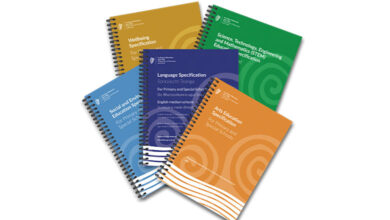
Policy has begun to shift to match this reality. The Department of Education and Youth’s Strategy for 2025 to 2028 places inclusion, digital competence and flexible pathways at its core. These ambitions are backed by €7.55 billion in capital investment between 2026 and 2030, which will modernise buildings, broaden provision and deliver more than 14,000 additional places in special classes and special schools.
Policy, investment, and population change are pushing the system to evolve. The direction is there; delivery is the test. The challenge and opportunity are in turning these ambitions into the everyday lived experience of students and teachers.

A different kind of classroom
Ireland’s learner profile has changed in ways that reflect wider positive shifts in society. There is more recognition that many children need tailored support. More families expect a broader set of options. More adults see learning as something that happens across a lifetime rather than at a single stage.
National data reinforces this. More than 972,000 children and young people are enrolled in primary and post-primary schools, supported by almost 3,000 special classes and a steady increase in specialist staff. The demand for accessible, well-designed educational environments is rising because more children are being identified, supported and included than ever before.
Further education has also expanded. Colleges and training providers now offer flexible routes, shorter courses and skills-focused programmes that fit around work and family life. People move in and out of education as modern careers require. This broader approach values practical, applied and community-based education alongside traditional academic routes, helping Ireland remain competitive while providing real choices.
Technology is also reshaping what learners need. AI is not only transforming how people work and the skills they require, but it is also prompting educational institutions to adapt their programmes. This raises questions about how to responsibly integrate new tools and content, and how best to support staff. How education responds to AI matters. Learners are preparing for jobs that will look very different from today’s.
Designing for everyone
Inclusion is now a design principle for a modern, competitive system, not a separate strand. The Department’s strategy links inclusion to decisions on curriculum, buildings, teacher support, wellbeing and data, shaping how the system grows and how resources are prioritised.
This is not about “accommodating” diverse needs. It is about recognising that diversity is part of Ireland’s present and future. A more inclusive system is also more effective and economically resilient. When learners see themselves reflected in the system, they participate more confidently. When supports are joined up, they achieve more. When pathways are clear, people stay engaged throughout their lives.
The practical steps that create inclusion are often small and very concrete: admissions processes that are easy to follow; assessments that happen early enough to be useful; clear communication between schools, families and services; buildings designed for accessibility; support services that talk to one another; and data that follows the learner rather than sitting in separate systems. These details create a system that feels navigable rather than overwhelming. When they are in place, the impact shows up in confidence, attendance and progression.
Meanwhile, the nature of work is shifting. AI is automating routine tasks, changing job profiles and requiring new forms of digital fluency. At the same time, the skills that matter most are the ones humans do best: critical thinking, creativity, communication, collaboration and curiosity.
Curriculum reform is moving in this direction. Digital competence is a priority, and higher education is updating programmes for emerging industries. Ireland’s current capital investment aligns physical spaces with modern learning. When buildings are designed for actual teaching and learning needs, supportive, flexible and digital-first environments follow.
How change becomes real
Policy speaks to ambition. Investment shows commitment. But change becomes real only when people experience the system as it is meant to work.
That happens when a child moves between supports without delay. When a parent understands their options without needing to navigate a maze. When a teacher uses digital tools naturally, without extra administrative strain. These moments often look small from the outside. They feel significant to the people living them.
I did not begin my career expecting to work in education. What changed was a pivotal project that exposed me to the realities faced by learners, families and staff striving to succeed within complex systems. The delivery of this project was not a minor task, it was a meaningful initiative that demonstrated how clear processes, accurate information and coordinated support can transform experiences and outcomes. That project shaped my understanding of the sector and its potential for impact. It opened a door into a sector that felt purposeful in a very tangible way, and that experience has stayed with me.
Over time, my work has spanned schools, colleges, universities, public agencies and government departments. That breadth has shown me how decisions in one area affect many others. Curriculum reform relies on digital tools that need to function reliably. Support models depend on funding and staffing. The implications of national policies are felt at the local level, in busy offices and classrooms. Large ambitions only succeed when small details align.
Educational work is now multidisciplinary. Teaching relies on digital infrastructure, inclusion in coordinated support, and digital transformation in understanding behaviour as much as technology. Finance, HR, operations and design are all essential.
What becomes obvious across the system is that real change depends on the operational spine of education. Consistent processes, good information, clear decision-making and strong communication are the daily mechanics that determine whether a system feels supportive or complicated. When operations are strong, reform becomes achievable. When they are unclear, even well-designed policies can falter.
“Education has an opportunity to shape a more inclusive and competitive future.”
Thinking bigger
Education reform now requires broader skills. Curriculum, digital infrastructure, staffing, wellbeing and investment all interact. Organisations and advisers must expand their expertise to address these interconnected shifts.
At Grant Thornton, integrating specialists across education, finance, technology, and organisational design has created a more rounded approach. Solutions have to address funding, digital tools, the workforce, the learner experience, and community impact together if they are to last.
One of the biggest shifts in our work over the past year has been the move towards deeper international collaboration. Since Grant Thornton Ireland became part of a wider multinational platform, there is more opportunity to work alongside colleagues whose perspectives are shaped by other systems and contexts. That has changed how I think about reform and what I see as possible.
Every country is wrestling with its own version of similar questions. How do you prepare learners for an economy shaped by AI? How do you build capacity fast enough to keep pace with demographic change? How do you consistently design supports that reach a more diverse population? How do you stay competitive while keeping education human and accessible?
These international approaches underscore a key point: the ability to adapt, learn from others, and make thoughtful, locally tailored decisions will define Ireland’s educational future. As reform progresses, the task is to stay open to new ideas while ensuring the system remains responsive, inclusive and competitive. The road ahead is complex, but through collective effort, practical focus and innovative thinking, the promise of a stronger, more accessible education system can become a lasting reality for all.
Being part of a multinational platform also influences how we work as a team. It has brought together people with expertise in technology, finance, organisational design, behavioural insight and public-sector delivery. That mix has made our approach more practical and more grounded. It reflects the direction in which education itself is moving. No single discipline can carry the weight of modern reform. Solutions now need to account for funding, data flows, digital tools, workforce capacity and learner experience, all at the same time.
What I value most in this global work is the shared ambition. Everywhere, people want education systems that are more inclusive, more flexible and more resilient in the face of change. Being part of an international platform means learning from those efforts, sharing our own experience and supporting Irish organisations with a view that is both local and global. It gives me confidence that Ireland can not only respond to change, but shape its own future in a way that matches who we are becoming as a society.
Ireland’s next step
Ireland is more diverse, more connected and more dynamic than at any point in recent memory. The economy demands flexibility and innovation. Learners need confidence, curiosity and digital fluency. Families expect a system that works for them. Policy and investment reflect these expectations.
The next step is to ensure that delivery keeps pace. That means creating learning environments that reflect modern needs, designing pathways that feel navigable and supporting teachers through change.
It means building systems that value people’s time and help them focus on what matters. And it means continuing to see diversity not as a pressure but as a strength that enriches education, makes it fairer and better able to meet future challenges.
Ireland has a strong foundation. It also has a clear sense of direction. The task now is to build a system that reflects the country we are becoming, not just the one we have been.
Education shapes futures and communities. That is why the details and delivery matter. The way the next phase of the system is built will determine not only what education looks like, but how it feels for the people who rely on it every day.
Ali O’Sullivan is a Consulting Director and Head of Education for Grant Thornton Ireland
W: www.grantthornton.ie