A redeveloped primary curriculum for a changing Ireland
Ireland’s classrooms are at the heart of a society that is changing faster than ever before. Children attending our primary and special schools are growing up in a world shaped by climate change, the ubiquity of social media and streaming services, transformative technologies like AI, and rapid geopolitical shifts, and they have lived through a pandemic.
At the National Council for Curriculum and Assessment (NCCA), we have been asking: What is the purpose of a primary school education in today’s world? What knowledge, skills, dispositions, and values will help children thrive and flourish? And what then are the types of experiences children will need in schools?
As part of our statutory role in advising the Minister for Education and Youth on curriculum and assessment, we have recently completed a major redevelopment of the curriculum for all primary and special schools. This marks a significant moment in Irish education, shaping what children learn, and how they learn, for a new generation of learners.
“Curriculum, the story one generation tells to the next.”
Anne Looney
Why change?
Since the 1990s, research into children’s learning has developed significantly. We now have a deeper understanding of how children experience the world, how they learn most effectively, and the factors that help them reach their full potential. The redeveloped curriculum reflects these insights and responds to the realities of a modern, diverse, and rapidly changing society, ensuring that children are supported to thrive in today’s world.
The redevelopment was undertaken by the NCCA through years of extensive research, consultation, and collaboration with education partners and stakeholders including teachers, and school leaders. Through citizen-centred policy design, children, their parents and the general public were able to have their say. Importantly, the voices of children played a central role, highlighting the need for a curriculum that responds to their lives today while preparing them for the future.
Launching the curriculum on 22 September 2025, the then-Minister for Education and Youth, Helen McEntee TD said: “This new curriculum is designed for the children of today and tomorrow. It reflects the world they are growing up in; one that is fast-changing, interconnected, and full of opportunity. Our goal is to ensure every child in Ireland receives an education that is inclusive, empowering, and deeply relevant to their lives.”
What is changing?
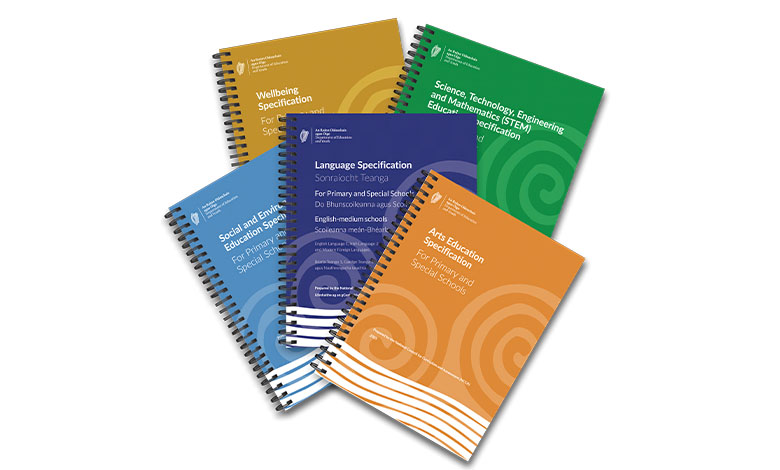
The redeveloped curriculum aims to provide a strong foundation for every child to thrive and flourish, supporting them in realising their full potential as individuals and as members of communities and society. The curriculum includes the Primary Curriculum Framework and new specifications for five curriculum areas. The framework sets out the nature, structure and content for the curriculum. It forms the basis for high-quality learning, teaching and assessment for all children.
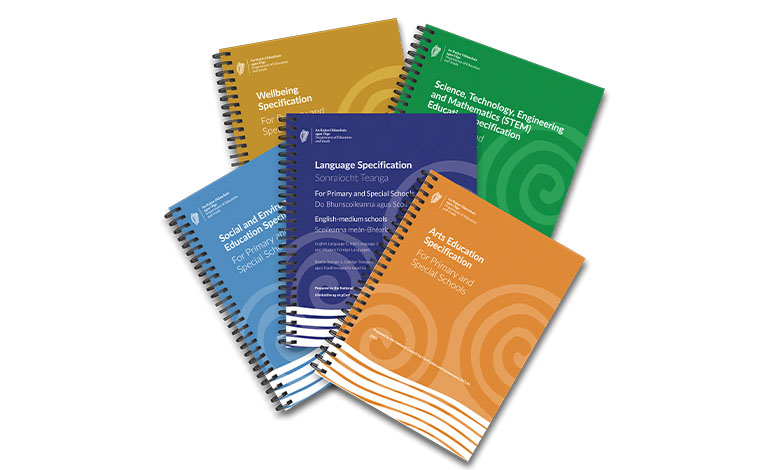
One of the most visible changes is in the structure of the curriculum. The first four years of primary school will now focus on five broad curriculum areas rather than 11 separate subjects. From third class onwards, these areas will gradually become more subject-based to reflect children’s growing understanding and interests. Building on the strengths of the previous curriculum, the five curriculum areas respond directly to today’s challenges, changing priorities, and the evolving needs of children. New aspects of learning are also being introduced. These include engineering, modern foreign languages (from third class), a broader approach to arts education, and learning about religions, beliefs and worldviews within history and geography. Digital learning will also feature more prominently across the curriculum:
- Language: English, Irish, and modern foreign languages (from third class)
- STEM education: Science, technology, engineering; and mathematics
- Wellbeing: Social, personal and health education (SPHE); and physical education (PE)
- Arts education: Music; drama; and art
- Social and environmental education: History; and geography incorporating learning about religions, beliefs and worldviews
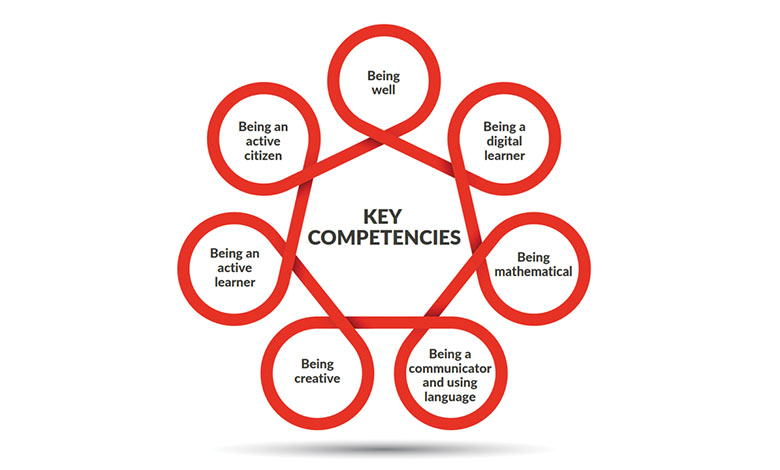
Amongst the priorities for children’s learning are a set of seven key competencies. These refer to the knowledge, skills, attitudes and values that children develop as they progress through school. They include being an active citizen; being an active learner; and being creative. These competencies will support children to grow and develop intellectually, personally, socially, morally and physically.
The redeveloped curriculum has strong connections with Aistear: the Early Childhood Curriculum Framework and with the Framework for Junior Cycle. This will help to ensure better progression in what children learn, and a smoother and a more positive journey for them from early childhood settings through to post-primary school. This helps create a smoother, more positive learning journey from early childhood right through to secondary school.
Supporting schools
The NCCA will provide comprehensive online curriculum toolkits to support schools and teachers as they work with the redeveloped curriculum. The toolkits will be available at www.curriculumonline.ie and contain:
- guidance on important aspects of primary education such as assessment, and school and classroom planning;
- examples of children’s learning across the curriculum areas and subjects; and
- examples of effective teaching approaches, to foster rich learning experiences and encourage connections with the home and community.
The Department of Education and Youth has developed an extensive and phased plan to support schools as they introduce and enact the curriculum, supported by guidance and resources. This phased approach will allow teachers and school leaders to familiarise themselves and begin working with the curriculum’s content and approaches to learning, teaching and assessment, at a pace that is manageable for them.
Mar a deir an seanrá, is de réir a chéile a thógtar na caisleáin.
T: +353 1 661 7177
E: info@ncca.ie
W: www.ncca.ie