, , : Reforming justice

Friday, August 31st, 2012
More “smart and dynamic reform” is needed to improve services for the public, according to Justice Minister Alan Shatter. Meadhbh Monahan reports. Prison refurbishments, providing alternatives to custody, closing garda stations and court reforms are underway in order to ensure that services are “more customer-focused, leaner, better integrated and delivering value for money.” Alan Shatter addressed an eolas justice seminar in June, impressing on delegates the need for all justice sector bodies “to challenge assumptions and ask harder questions of ourselves and our colleagues.”...[full story]

: PwC: An opportunity for transformation

Friday, August 31st, 2012
PwC Consulting Partner David McGee outlines the need for a systems-thinking approach in the criminal justice sector to ensure a transformed, efficient and modernised service. The Irish criminal justice sector is facing some of the biggest challenges in its history. One of the more significant of these is  unprecedented cost pressures. This challenge also presents significant opportunities if we are prepared to grasp them. The new multi-annual expenditure framework allows for transparency about the allocations available to each department over the coming three-year period. The justice...[full story]

: Policing: A new era

Friday, August 31st, 2012
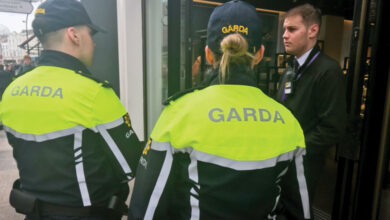
An Garda Síochána is adapting to deal with the greatest period of societal change since its formation in 1922, Deputy Commissioner Noirín O’Sullivan tells Meadhbh Monahan. “Over the last few years crime moved from being local to global. People now expect a more sophisticated response to crime,” Noirín O’Sullivan says. The Celtic Tiger era brought with it increased wealth, changes in behaviours and social norms. “We’ve bemoaned the loss of some of our céad míle fáilte in Ireland,” O’Sullivan comments, adding: “I believe the last decade has seen one of the greatest...[full story]

: Crime and punishment

Friday, August 31st, 2012
UCD Professor of Criminology Ian O’Donnell discusses rising prison rates and alternatives to custody with Stephen Dineen. “People sometimes think that when the rate of imprisonment goes up that reflects the increase in the underlying level of crime,” O’Donnell tells eolas. “That isn’t the case.” Ireland’s prison population has risen dramatically. In 1999 the first ‘World Prison Population List’ showed it to be 65 per 100,000 people: 20 percentage points below the EU-15 average. By 2011 it had risen to 100 people per 100,000. Whilst the rate climbed only to the EU-15...[full story]

: Improving prison standards

Friday, August 31st, 2012
A capital reform programme is underway to update Ireland’s out-dated prison estate. Reducing re-offending through rehabilitation is key, Irish Prison Service Director General Michael Donellan tells Meadhbh Monahan. An efficient prison service is manifested in “outcomes, the humanity with which we treat those in our care and the respect we show for their fundamental rights,” according to Michael Donellan. The poor state of some of Ireland’s prisons has been under scrutiny for many years. In 2009, the Inspector of Prisons Judge Michael Reilly published standards to be expected in...[full story]

: Delayed reactions

Friday, August 31st, 2012
Acting Chief Inspector of Criminal Justice Northern Ireland (CJI) Brendan McGuigan talks to Stephen Dineen about the need for political leadership and radical measures to reduce avoidable delays in justice. Brendan McGuigan is clearly frustrated at delays in Northern Ireland’s criminal justice system. Inadequate progress has led him to again call for statutory time limits on cases. Criminal Justice Inspection Northern Ireland (CJI) produced two inspections into the topic (in 2006 and 2010). In 2011, it did “a quick follow-up” to inform the Minister as to whether things were changing. Addressing...[full story]

: Rights for those wronged

Friday, August 31st, 2012
Greg Heylin, Director of the Victims of Crime Office, tells Stephen Dineen about the proposed Victims Directive and the pivotal role of the voluntary sector in Ireland. In the area of victims’ rights, the last 18 months have seen significant developments at home and abroad. The first commitment in the justice section of the Programme for Government is to enact legislation to strengthen victims’ rights. This legislation is likely to be used to transpose the new EU Directive on victims’ rights and protections. A draft was published in May 2011 and the Directive is expected to be adopted...[full story]

: Solving problems in the legal system

Friday, August 31st, 2012
Ireland’s legal system is dysfunctional, inefficient and costly. Irish Times Legal Affairs Editor Carol Coulter discusses her potential solutions with Meadhbh Monahan. A “fundamental examination of how the existing system works and very focused measures to try and fix it,” is vital for reform in Carol Coulter’s view. Legal costs and inefficient court proceedings (such as allowing gardaí to be paid over-time for waiting in court for a case that doesn’t go ahead) must be dealt with “aggressively” by the Government, the journalist claims. In addition, access to justice for...[full story]

: Innovation and accountability: G4S

Wednesday, November 9th, 2011
With the reform of the public sector driven by the EU-IMF bailout, outsourcing is now very much on the Government’s agenda. eolas talks to G4S’s Niall Feely about the potential for outsourcing in the justice system and how it can not only reduce cost but deliver innovation in service delivery. There are now over 4,500 people within the justice system which is under pressure because of a number of issues. Increasing prisoner numbers and the early release scheme are causing public concern and these pressures look set to continue. In addition, the quality of the prison estate has been...[full story]

: General overview

Wednesday, November 9th, 2011
eolas outlines the main tenets of the criminal justice system. The criminal justice system and its main components of law enforcement, trial, correction and victim protection are checked by constitutional rights such as the rights to trial by jury, liberty, fair procedures and privacy. Policing An Garda Síochána is headed by Commissioner Martin Callinan. On 11 October 2011 the force had 14,113 Gardaí and 1,002 Garda Reserve members. There were 2,098 civilian staff on 1 March 2011. In its 2010 annual report the force identified key actions for confronting crime such as better management...[full story]